
Author Kevin R. Donley presents his recently published, “As If By Chance: Sketches of Disruptive Continuity in the Age of Print from Johannes Gutenberg to Steve Jobs,” on the history of printing technology at the Detroit Club of Printing House Craftsmen (DCPHC) meeting held at the Detroit Historical Museum on Wednesday, February 19, 2024.
Category: Uncategorized
New Book Now Available: As If By Chance

Southfield, MI, January 26, 2024 –(PR.com)– Fulton Books author Kevin Reed Donley—who has worked in the graphic arts, publishing, and printing industries in the Detroit area for over forty years—has completed his most recent book, “As if by Chance: Sketches of Disruptive Continuity in the Age of Print from Johannes Gutenberg to Steve Jobs”: a fascinating look at the evolution of printing technology since the time of Gutenberg and the resonating relevance of this history for the modern digital age.
Born and raised in Point Pleasant, New Jersey, author Kevin Reed Donley graduated from Rutgers University with a degree in Bachelor of Arts in Graphic Design in 1982, after which he relocated to Detroit to start his professional career. In 1997, Kevin became a certified business planning executive with the National Association for Printing Leadership Management Institute at Northwestern University.
The author is active in the Detroit and Michigan graphic arts and printing community and has also been an active participant in the national and international technical standards initiatives of the printing industry. Donley is a speaker on printing business and technology topics, having addressed audiences at colleges and universities and industry events for more than three decades. In 2008, he launched a blog called “Multimediaman: Know the Past, Create the Future” at multimediaman.net and published studies of major innovators in the history of print technology as well as reviews of contemporary developments in new electronic and digital media.
“This book discusses these two bookends in the age of print,” writes Donley. “It follows the transitions and stages of innovation in printing between the fifteenth and twenty-first centuries and shows how the inventors responsible for this progress are bound together in a chain of revolutionary technical change called disruptive continuity.
“While the works of Gutenberg and Jobs are separated by more than five centuries, there are striking parallels and differences between these two innovations. They both sparked the quantitative expansion of literacy and the spread of knowledge around the world. However, the emergence of electronic publishing—especially in its present-day social media forms—has brought a vast increase in the consumption of information while also heralding a qualitative transformation that places the tools of wireless and mobile multimedia publishing into the hands of billions of people on earth.
“Much in the same way that there was a historical lag between Gutenberg’s invention and the full impact of printing on the world, so too in our own time, the long-term societal consequences of electronic publishing have yet to be realized.”
Published by Fulton Books, Kevin Reed Donley’s book will provide readers with a comprehensive look at the transformations of the printing industry over the centuries, incorporating new innovations that correspond with fundamental technological, economic, and cultural needs of society.
Readers who wish to experience this engaging work can purchase “As if by Chance: Sketches of Disruptive Continuity in the Age of Print from Johannes Gutenberg to Steve Jobs” at bookstores everywhere, or online at the Apple iTunes store, Amazon, Google Play, or Barnes and Noble.
Please direct all media inquiries to Author Support via email at support@fultonbooks.com or via telephone at 877-210-0816.
Contact
Fulton Books
Media Relations
800-676-7845
http://www.fultonbooks.com
Crabbing & molting lessons from Barnegat Bay
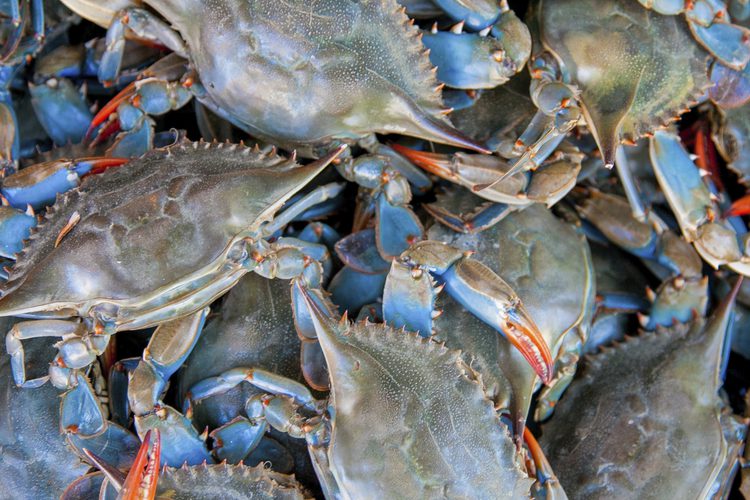
Growing up on the Jersey Shore and the Barnegat Bay, my brothers and I learned to go crabbing. We picked up different crabbing techniques from our friends and family members. Sometimes we just used a crab net and scooped up the creatures as they sidled in the water below us. Other times, when we wanted a more substantial catch, we’d use a cage.
The cage had a mechanism that allowed you to lower it into the water with a string and, when it touched bottom, all four sides would open up and allow the hungry bottom feeders to come after your bait.
Crabs are kind of like underwater rats. They will climb on top of each other and scramble around trying to get the last piece of food before the next crab can get it. They have very small brains (about the size of a pencil point) and are not involved in any kind of complex social cooperation. Usually the biggest crab, gets its way.
Anyway, our crab cage freshly bated with a piece of chicken (usually a neck or a leg), we’d lower it to the bottom of the creek or lagoon that fed into the bay. Our favorite spots were Beaver Dam Creek and Sunshine Harbor in Point Pleasant. Sometimes we would crab from a boat and sometimes from a bulkhead. Either way, we’d wait a little while and then pull up the cage. Collecting our catch, we would carefully toss the best crabs into a bucket of water one by a one.
It wasn’t that hard to learn how to avoid being pinched. You just had to grab hold of the crab at the back with your thumb on the top and bent forefinger on bottom and you could easily drop each one into your catch pail. This did not always work, however, especially with the biggest crabs. They had a knack for reaching around with their claws and catching you by surprise. It usually didn’t hurt that bad since you could flick them off of you pretty fast. But sometimes the bigger male crabs could latch on to you pretty good and help you have quite an episode of cursing.
If we were going by the book, we’d throw anything smaller than about four inches (across the body) and all the females back and keep only the larger males (the sex of a crab is easily determined by looking at the pattern of the apron on the underside of the crab; a long thin apron shape is a male and a round pointed apron is a female).
Some Jersey Shore folks would just crack those crabs wide open while they were alive and slurp away the crab juice and meat right then and there. Others would take them home and put a big pot on the stove and prepare a tasty boiled meal.
Anyway, on rare occasions, if you left the cage in the water long enough you’d pull up a soft-shell crab. We knew they were special. First of all because of their color; they were white on the underside and lacked the bright blue and red colors on their Jersey Blue legs and claws. They looked sick and were kind of floppy since they had no hardened shell. Since we crabbed for the eating of the creatures, we knew soft-shell crabs were, of course, very good to eat. You never wanted to throw a soft shell crab back no matter what.
Later on, we learned that soft-shell crabs were actually regular crabs that had recently molted; that is, they had shed their hard exoskeleton as part of the growth process. It was a real lesson to learn that when crabs molt, they are very vulnerable. During a process that takes about 72 hours, a crab must extract itself including eyes, mouth and the lining of its digestive tract from the old shell. If the crab gets stuck in this process, it will die. If a crab is successful in removing itself from the exuvia, a new shell begins forming almost immediately allowing the crab to grow. A crab will molt more than twenty times in its lifetime.
The moral of the story is this: If you catch a soft shell crab, boil it and eat it. If you throw it back and allow it to finish molting, it will grow bigger and surely pinch you when you least expect it.
 MULTIMEDIAMAN