Efraim “Efi” Arazi (1937–2013): Color electronic prepress systems

Efraim “Efi” Arazi: April 14, 1937 – April 14, 2013

One of the most important achievements of personal computers and mobile wireless technologies is that they have made it possible for the general public to do things that could previously be done only by professionals.

Take video for example: according to YouTube statistics, 300 hours of digital video is uploaded every minute of every day by people all over the world. This remarkable volume of video is being generated because just about anyone can record, edit and upload a high-definition movie from their smartphone. According to a recent Pew Research study, about one third of online adults (ages 18-50) had posted digital video to a website by 2013.

It is easy to take for granted the video production functions that are performed routinely today on inexpensive and easy to use mobile devices. Less than ten years ago, the ability to capture and edit HD video would have cost tens of thousands of dollars in digital camera and production equipment and required extensive training to use it.

The same can be said for the ability to quickly create a document in a word processing program and insert high resolution graphics anywhere on the page, cropping and scaling as needed. Applying filters and adjusting image quality (contrast, brightness, sharpness) is also second nature as these functions are today available on every mobile device.

CEPS

Four decades ago, before the personal computer existed, electronic image editing, scaling and cropping could only be performed on very expensive prepress systems that cost more than $1 million. That was during the era of what was known as color electronic prepress systems (CEPS) that were built on state-of-the-art minicomputers with reel-to-reel magnetic tape for data storage.
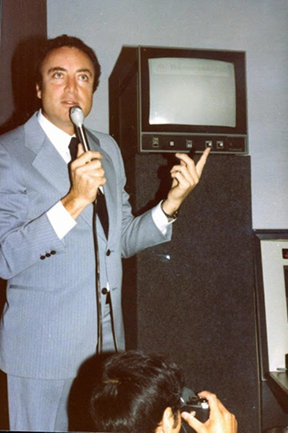
Arazi making a presentation of the Scitex  CEPS equipment in 1979
Arazi making a presentation of the Scitex CEPS equipment in 1979

During the 1960s and 1970s, as commercial offset lithography and film-based color reproduction were overtaking letterpress and single color work, high-end digital electronic production systems were acquired by the big printing companies and major publishers that could afford the investment.

By the 1960s—after analog electronic systems had been widely adopted in pressrooms and prepress and typesetting departments across both Europe and America—a race was on to develop a fully computerized page composing system. Companies like Hell, Crosfield, Dai Nippon Screen and other companies that had been part of the post-war electronics revolution jumped into the market to try and solve the problem of merging text and color photographs together electronically on a computer display.

However, it was a newcomer to the graphic arts industry from Israel called Scitex, founded by Efraim “Efi” Arazi in 1968, that made the highly anticipated breakthrough. Foreshadowing the impact of PC-based desktop publishing on graphic communications in the late 1980s, Scitex introduced digital files and computerization to the prepress production process and forever changed the printing industry.

Scitex

Efi Arazi (born in Jerusalem on April 14, 1937) entered the Israeli military when he was 16 and without graduating from high school. He made a name for himself as an exceptional electronics specialist while working on radar systems in the Israeli air force. Following his military service, with the assistance of the US embassy Arazi was admitted to the Massachusetts Institute of Technology in 1958 as an “extraordinary case” despite his lack of the normally requisite secondary school diploma.

While attending MIT, Arazi also worked at Harvard University’s observatory and digital photography lab. Under the direction of Harvard Professor Mario Grossi, Arazi petitioned NASA and was awarded funds to develop a camera system for scanning the surface of the moon on the unmanned lunar probes in 1966 and 1967. It has also been reported that Arazi’s invention was part of the equipment on the Apollo 11 mission that captured and transmitted video of Neil Armstrong’s first footsteps on the Moon on July 20, 1969.

After earning a bachelor degree in engineering at MIT, Arazi worked in the US for a short time for Itek corporation, a US defense contractor that specialized in spy satellite imagery. In 1967 he returned to Israel and one year later—along with several others who had been educated in the US—founded Scientific Technologies (later shortened to Scitex) with the aim of developing electro-optical devices for commercial purposes.

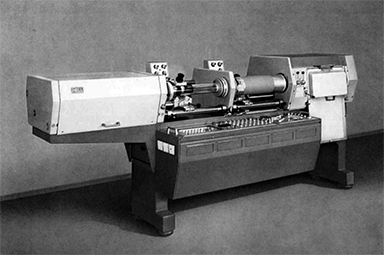
The Scitex Response 80 system and an example of a stitching designs from it
The Scitex Response 80 system and an example of a stitching design from it

Scitex’s first products were developed for the textile industry. The company sold nearly one hundred electronic systems that automated the process of creating knitting patterns. Since many colors were used in complex fabric designs such as the popular Jacquard pattern, Arazi and his Scitex team developed a scanner (Chroma-Scan) and image manipulation workstation (Response 80) that programmed electronic double-knit stitching looms.

These optical systems replaced manual and time consuming stitch-by-stitch drawings and punch cards that had been widely used in the textile industry up to that time. Scitex also later devised a system for imaging film for printing on textiles that included overprinting, trapping and repeating patterns.

Response 300

Recognizing the potential for new technologies in the growing international printing and publishing industries, Scitex began development in 1975 of a computerized color prepress system. Arazi stunned the graphic arts industry in the Fall of 1979 when he demonstrated the Response 300 system for the first time at the GEC expo in Milan, Italy.

Response 300 included an integrated color drum scanner, image editing workstation and laser film plotter. Directly challenging the domination of high tech graphic arts equipment by Hell (Germany) and Crosfield (UK), Scitex was the first company in the world to combine color image retouching and page makeup onto a single console.
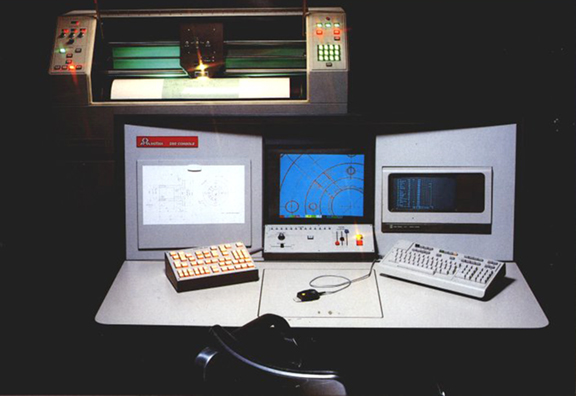
An early model Scitex Response workstation and console

Prior to the Response 300, the electronic color scanning process was based on an analog transfer of color separation information directly from a drum scanner to the film output device. The innovation of Arazi and Scitex was to place a minicomputer (at that time an HP1000) between the scanner and plotter such that the color separations were captured and stored in digital form. The proprietary image files could then be color corrected, retouched, scaled and cropped on screen prior to final output as film separations.

In describing the significance of the accomplishment, industry historian Andy Tribute later explained, “It allowed you to do in real-time on a terminal the sort of things we do in Photoshop now. … I remember watching Efi do a demo where he had a picture of a person with a Rolex watch on and he changed the date in real time on the Rolex. Today that may seem nothing but back then it blew my mind”

Within one year, Scitex had sold $100 million of the Response systems to printers and publishers. Through the mid-1980s, Arazi led Scitex as it developed a suite of products (Raystar, SmartScanner, Whipser, Prisma and Prismax Superstation to name a few) that brought the latest in minicomputer technologies to high-end prepress workflows. Scitex customers gladly paid the $1 million price tag for the flexibility and time savings that Scitex provided.

DTP & EFI

The first European installation of the Response 200 system for the textile industry in 1975

Scitex remained an innovator throughout the 1980s and 1990s as proprietary technologies and CEPS gave way to desktop publishing, industry standard file formats and PostScript workflows. Scitex was among the first prepress technology companies to embrace the introduction of Macintosh computers into graphic arts production.

In 1988, Scitex partnered with Quark technologies—developer of the most sophisticated desktop publishing software at the time—and made it possible for QuarkXPress users to build compound documents with high resolution full color images to be output for both commercial and publication printing.

In 1985, Arazi pushed the industry forward with the development of Handshake, a Scitex product that allowed a wide variety of systems including those of competitors to send and receive data from the Response line of products. Later Scitex was an advocate of Digital Data Exchange Standards along with Hell, Crosfield, Eikonix and others to smooth that transfer of data between all systems in the industry.

In June 1988, Arazi stepped down as President and CEO of Scitex. Six months later, when Mirror Group’s Robert Maxwell acquired a controlling stake in Scitex, Efi Arazi also resigned as chairman of the board. While the company had reached the height of its success with revenues approaching $1 billion and 4,000 employees, Arazi knew that personal computers were transforming the industry and it was time to move on to other business ventures.

After Arazi’s departure, Scitex continued to develop prepress workflow systems, laser imaging equipment, desktop scanners, digital color and soft proofing devices. The company participated in the transition from film-based workflows to the direct-to-plate revolution of the mid-1990s.

Along with all of its competitors, Scitex began to struggle financially and ended up selling its graphic arts group to Vancouver-based competitor Creo Products in 2000. The division of the company that went into digital printing called Scitex Vision was acquired along with the Scitex name by HP in 2005. The remainder of the business was renamed Scailex at that time.

In 1988 Efi Arazi founded Electronics for Imaging (EFI) at the age of 51. The new venture was no less successful then Scitex as EFI raster image processors were integrated in many high quality color laser and toner based printing devices. The EFI Fiery technology quickly became a standard in the graphic arts industry by the 1990s for low cost, high quality color proofs. The company—which bears the first name of its founder as an acronym—later expanded into ink jet printing devices, printing industry productivity software and print server and workflow software tools. Today EFI is one of the most important and successful technology companies in the rapidly changing printing industry. Efraim Arazi died on April 14, 2013 at age 76.
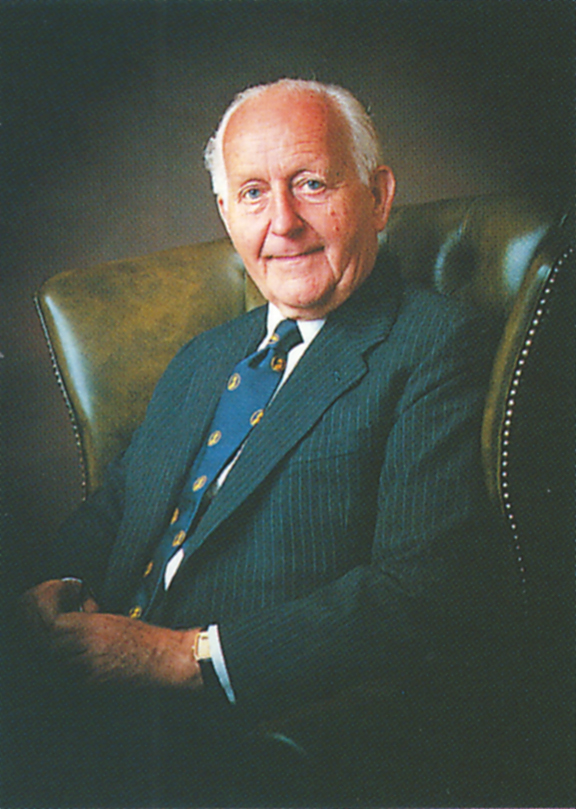
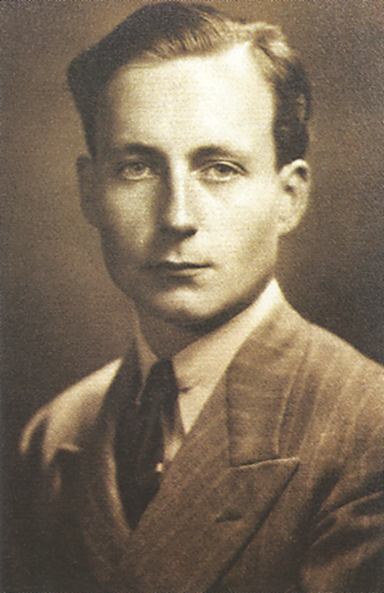
John Crosfield (1915 – 2012): Printing press automation

John Crosfield
John Fothergill Crosfield: October 22, 1915 – March 25, 2012

Today’s digital and mobile wireless technologies are in a constant state of flux. As we pass the midpoint of 2015, the human computer interface is being once again transformed with haptic technology—tactile feedback from a device such as force or vibration.

If you have felt vibration in response to a touch function on your smartphone, then you have experienced haptics. What was until recently available only to virtual reality enthusiasts and gamers, is now a feature of every smartphone and tablet.

Technical evolution has been so fast that it is hard to believe smartphones have been around for less than eight years and the tablet is just a little over three years old. As we try to keep up with the pace of change, it is easy to miss the fact that the electronics revolution has been underway for more than a century and digital electronics represents less than half of that time period.

Electronic technology can be divided into two basic forms: analog and digital. Long before there were microprocessors and memory chips that exchange all information, data, code, signals, etc. in a series of zeroes and ones, there were analog electronics such as resistors, capacitors, inductors, diodes and transistors.

The difference between a clock with hour, minute and second hands rotating around the face and the numerals on an Light Emitting Diode (LED) clock display is a simple illustration of analogue vs digital technology.

John Crosfield’s contributions to printing and the graphic arts spanned both analogue and digital electronics. His analogue systems were developed in the late 1940s and became dominant in the industry throughout the 1950s. When the first computers were introduced in the 1960s, Crosfield pioneered digital electronics and became a major worldwide provider of equipment into the 1960s and mid-70s.

Crosfield’s youth

Young John Crosfield
Young John F. Crosfield

John Fothergill Crosfield was born into a well-off family. He was the third child and second son of prominent English Quakers. Born on October 22, 1915 in Hampstead, London—a community known for its intellectual, liberal, artistic, musical and literary associations—John had five siblings.

John’s father, Bertram Fothergill Crosfield, was managing director and co-proprietor of the News Chronical and The Star, both liberal daily newspapers in London. Bertram was also leader of several Hampstead organizations. John’s mother, Eleanor Cadbury, was the daughter of the famous chocolate maker and leading Quaker, George Cadbury. Eleanor was well-known independently of her father and was elected as a Liberal to Bucks County Council.

John showed an early interest in building things. As a boy, he was often busy in the family workshop making boats, steam engines and other mechanical devices. He once built a cannon and tested it on the garage door. The projectile went through the door and damaged his father’s Daimler. He was fond of trains and, with the assistance of a childhood friend, built an O gauge model railroad on the property of his school grounds.

At age 13 John was enrolled in Leighton Park School, a Quaker establishment. He enjoyed studying physics and math and decided he wanted to pursue engineering at college. Following in his father’s footsteps, John enrolled at Trinity College Cambridge. He designed and built gliders and other flying machinery such as a winch launcher in his spare time. Although he had many hobbies, John was an exceptional student and put most of his time into his studies.

John graduated from Cambridge in 1936 and went to Munich, Germany to improve his language skills. He came into contact with anti-Semitism and Nazi propaganda and was horrified by Hitler’s methods. Upon his return to England, John’s accounts of the treatment of political prisoners in Germany were met with disbelief.

World War II

John Crosfield was a member of a generation of engineers whose formative experiences were made in World War II. Much of the technology advancements that were deployed throughout industry in the post war period originated in the struggle by the warring countries for military supremacy.

After he left Cambridge, Crosfield took a student-apprentice engineering position with British Thomson-Hudson (BTH), a heavy industry firm based in Warwickshire. BTH was founded as a subsidiary of the US-based General Electric Company (GE) and specialized in steam turbines. In 1938, he left BTH and went to work at the Stockholm facility of ASEA, a Swedish version of BTH and GE. When the war began in 1939, John made his way back to England and planned to join the Navy.

Crosfield used some connections at ASEA to get an assignment by the Admiralty to the Mine Design Department. It was here that Crosfield’s electronic genius would begin to be expressed. He worked on a magnetic mine project that could detect German boats near British harbors.

Crosfield also designed and built a prototype of an acoustic mine that could pick up on the sound of the propeller of wooden German E-boats. The acoustic mine became a success with 200 being deployed in the Baltic Sea and sinking 47 enemy vessels. Crosfield and his colleagues later worked on the development of both acoustic and subsonic mines. He got involved in the production process and in 1944 Crosfield’s inventions proved extremely effective in major battles at the Straits of Dover and the Western Approaches.

Crosfield Electronics Limited & the Autotron

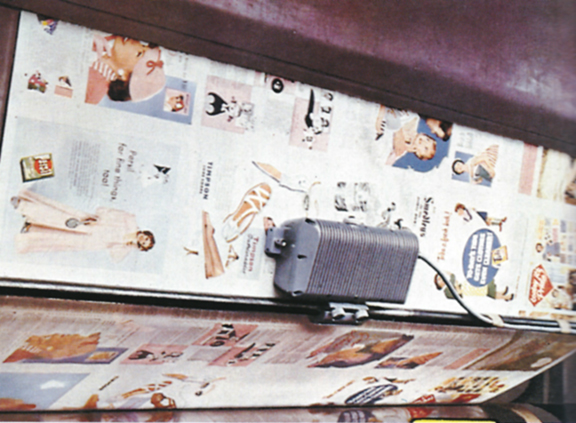
1949 advertisement for the Crosfield Autotron, the first automated electronic register control system

After the war, John Crosfield decided—after having learned from his experience at ASEA that some of the projects that he had worked on would never be funded—to start his own business. In 1947, he set up a lab in Hampstead and began working on new projects. He later recalled that in 1945, while he was in charge of electronics research for the Admiralty, he was approached by a printing industry representative about the problem of color registration on high speed rotogravure magazine presses. There was a need for an automated system to align all the process colors in the printed page to improve quality and reduce press waste.

With about £2,000 of his own money and another £2,500 borrowed from family members, Crosfield set out to design an electronic and automated registration system for color printing. After 18 months of hard work, the “Autotron” was tested as a prototype on the production of Women’s Weekly at Amalgamated Press in London. Prior to the Autotron, a magazine production run would often waste 25-30% of the impressions using manual controls. Crosfield’s automatic register system brought the waste figures down to 4-5%.

The Autotron consisted of a scanning heads mounted on each printing unit and a control cubicle that was located away from the press. The scanning heads picked up “register marks”—unobtrusive symbols on the printed page that were hidden from view—to regulate the movement of the printed image from unit to unit with an accuracy of one thousandth (1/1000) of an inch.

Word about the Autotron travelled quickly in the printing industry and Crosfield was soon taking prepaid orders from companies in Britain. An opportunity to show the system at the British Industries Fair in 1949 made Autotron an international phenomenon and orders were quickly being placed from printers in countries around the world.

Pressroom automation

The success of the Autotron encouraged John Crosfield to invest in further research in pressroom automation for gravure magazine printing and other presses such as offset newspaper and packaging print.

In Recollections of Crosfield Electronics, 1947 to 1975, John Crosfield wrote, “My philosophy was to concentrate our research on new electronic aids for the printing industry, in order to maximize the use of our electronic ‘know how’ on the one hand and our sales contacts in the printing industry on the other. Eventually we had the greatest range of electronic equipment for the printing industry of any company in the world.”

In the 1950s, Crosfield developed a suite of successful automation products for the industry:

  • Secatron: an optical system for packaging printers that kept images in the right position on the cardboard so they would look right on the finished carton.
  • Webatron: a system similar to Autotron for high speed presses that regulated the movement of paper through the press for delivery to folders and sheeters.
  • Trakatron: a system for regulating print on web-fed cellophane and wax paper presses.
  • Idotron: a system for measuring ink density on a web press to keep color reproduction consistent during press runs.
  • Viscomex: an ink viscosity control system that added solvents to the ink automatically as needed as a result of evaporation.
  • Flying Paster: an automatic splicing mechanism that enabled production to go from one roll of paper to the other without slowing down or stopping the press.
Crosfield Idotron measured and adjusted ink density inline on a high speed rotogravure press

Many of these systems relied upon photo-electric cells to detect movement of paper or printed images on the paper. Crosfield’s expertise in the area of optical sensors lead him to several other important breakthroughs in the composition and preparatory stages of print production. These developments took place in an environment of intense global competition with companies in Europe, the US and Middle East.

Phototypesetting and color scanning

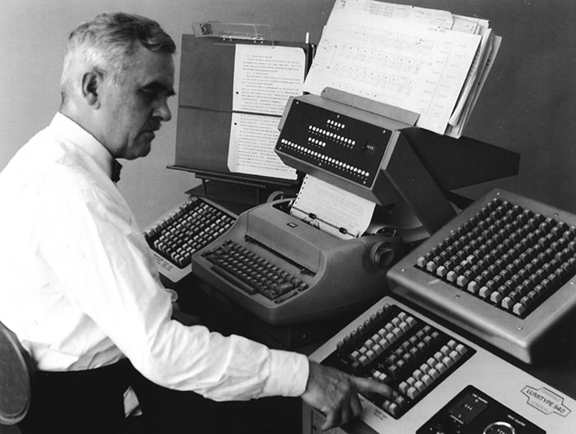
The Crosfield Lumitype 450 was the first phototypesetting system designed and built in Europe. It was licensed to Crosfield by the US based Photon.

By the 1960s, the printing industry had been moving rapidly into offset lithography. A major factor in this regard was the displacement of hot metal typesetting with cold type, i.e. phototypesetting systems. While Crosfield was not the inventor of the first phototypesetter, his company was a designer and builder of the Lumitype 540 under patents from the original inventors at Photon in the US. This relationship would continue through the development of the high speed Photon 713 in 1965, which was the first computer controlled phototypesetting system.

Among the greatest successes of Crosfield Electronics, Ltd. was its color scanning systems. The Crosfield Scanatron—which was developed in 1958—was the first scanning technology that could make color corrections and eliminate the time-consuming work of retouchers.

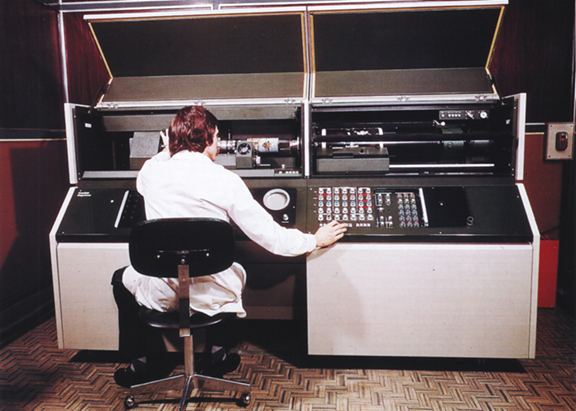
The Crosfield Magnascan was the first color scanning device that could retouch color electronically.

Crosfield continued with advancements in color scanning throughout the 1960s. The Magnascan was introduced in 1969 and it was capable of scanning a color transparency. It also had the software capability to adjust the size, form, color and hue such that the printed image was of the finest quality anywhere.

While the Magnascan was an international success, it was developed at the same time as Rudolf Hell’s Chromograph. Recognizing that a battle over who invented and patented the drum scanner first, the two men signed an agreement giving cross licenses for a modest royalty. Crosfield and Hell remained good friends from that point forward.

Impact of desktop computing

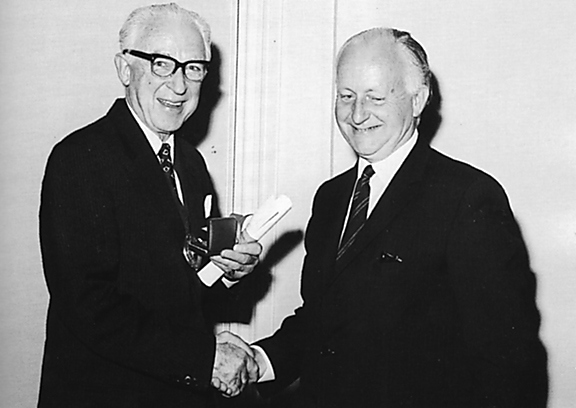
John Crosfield receiving the gold medal of the Institute of Printing in 1973

In addition to accomplishments in the graphic arts, Crosfield Electronics Limited (CEL). also developed computerized business systems and—leveraging the expertise in optical devices—invented a very successful automated bank note sorting and processing technology.

While the company was very successful in the printing market, an attempt to take CEL public in 1974 was made during a collapse of the stock exchange and Crosfield ended up selling his business to De La Rue. The color scanning segment of his business—the most profitable aspect of CEL—was sold by De La Rue in 1989 to a joint venture of Fuji and DuPont called Fujifilm Electronics Imaging.

With the introduction of the desktop PC—and especially the desktop publishing system associated with the Apple Macintosh computer in 1985 and shortly thereafter desktop flatbed scanners—Crosfield’s era graphic arts electronics had come to a close.

John Crosfield received many accolades for his contributions to the printing industry over nearly five decades, including four United Kingdom Queen’s Awards and the gold medal of the Institute of Printing in 1973. He remained a board member of De La Rue until 1985 and thereafter was Honorary President of CEL. A very modest, personable and generous man, John Crosfield died on March 25, 2012 at his home in Hampstead at age 96.

Rudolf Hell (1901 – 2002): Electronic engraving, typesetting and color scanning

Rudolf Hell: December 19, 1901 – March 11, 2002
Rudolf Hell: Dec 19, 1901 – Mar 11, 2002

During the twentieth century, printing technology made a major transition from mechanical and photomechanical to analog electronic and digital systems. The process took decades and by the 1990s all the technology of graphic arts production was impacted: design, text and image acquisition, typesetting, prepress, printing, binding and finishing. The result of this innovation was a dramatic improvement in the speed, quality, variety and complexity of printed material.

It is remarkable how the pace of electronic advancement—beginning with Marconi’s December 1901 wireless trans-Atlantic radio broadcast—accelerated throughout the century and influenced every industry and occupation. There were many important theoreticians, scientists and engineers that participated in this progression. A few of the most familiar names from the early 1900s are Planck (quantum theory,) Fleming (diode) and Einstein (relativity).

Rudolf Hell, whose life spanned the entire twentieth century, was an outstanding representative of the generation of engineers who participated in the electronics revolution. Particularly after World War II, Hell was responsible for many critical inventions related to the image reproduction aspects of printing. The truth is that Rudolf Hell is such an important figure and his inventions are so numerous—he is credited with more than 130 patents—that it is only possible to focus here on the most significant of his achievements.

Early years

Rudolf Hell was born on December 19, 1901 in Eggmühl, Germany, about 70 miles northeast of Munich. Rudolf’s father Karl Hell was the train stationmaster for the Royal Bavarian Railway at Eggmühl. The family lived in the romantic style station building and it was here that Rudolf had early exposure to the telegraph.

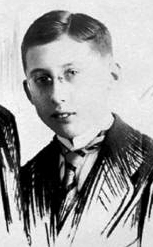
Young Rudolf Hell
The young Rudolf Hell

Rudolf’s mother was the daughter of a brewery owner and he would later describe her as “vivacious.” It seems that Rudolf inherited his entrepreneurialism from his mother since his father was very much “a proper official” and “quite relaxed and Bavarian in character.” When Rudolf was six years old, his father relocated the family to the town of Eger—now a border town in the Czech Republic—to become the stationmaster of an Austro-Hungarian freight station, an important transfer point to the Saxon and Bohemian railway lines. Rudolf attended school for twelve years in Eger.

While in high school at the Rudolphinum Oberrealschule, Hell earned high marks in math and science. He would later explain, “I was always the best in physics, and in mathematics too. I was mediocre in languages, and poor in the subjects that required me to study a lot.” Just before age eighteen, Rudolf enrolled in the Technical University at Munich (THM) to study electrical engineering.

In 1923, he received a masters degree from THM in electrical engineering at the age of 22. He then became Assistant to Professor Max Dieckmann, a specialist in wireless telegraphy at the university. While continuing his studies, Hell worked with Dieckmann on innovations in radio direction finding and television technology.

Germany is home to the invention of the CRT (cathode ray tube) and the oscilloscope by Karl Ferdinand Braun in 1897. This device is the foundation of the first functioning television systems that were invented more or less simultaneously by Takayanagi (Japan), Farnsworth (US) and Zworykin (USSR and US) in the mid-1920s. For many people, the idea of transmitting moving pictures through a wireless medium was a fantasy. Such was the case with Dieckmann’s superiors at THM who forced the professor to rename his course in “wireless television” to something less provocative.

Professor Max Dieckmann

This did not stop Rudolf Hell. In 1925, he filed a patent along with Dieckmann for a photoelectric scanning tube that was basically a primitive television camera. The concept behind this device—the “image dissector tube”—was that images or scenes could be broken up into small picture elements and transmitted to a receiver for viewing. In that same year, Hell and Dieckmann presented a complete radio-based television system at the Transport Exposition in Munich that included a reception station.

Rudolf Hell’s “image dissection,” transmission and reassembly of picture elements (pixels) is at the heart of his remarkable career. To understand the significance of the accomplishment, it is useful to put it into a modern day perspective. In 1925, Hell’s “image dissector tube” was understood by a handful of engineers and physicists; today, the concept and its practical application are familiar to billions of people all over the world in the form of “megapixel” cameras in their mobile phones.

In 1927, Hell received a Ph.D. for his dissertation on “direct-indicating radio direction finder for aviation.” Far ahead of its time, this system enabled pilots to navigate their flights in poor visibility conditions by homing in on a radio beacon. While initially ridiculed by “experts” because “no one flies in the fog anyway and when the weather is clear you don’t need it,” Hell’s invention became the technical basis of all automatic guidance systems and aircraft autopilot technologies. Rudolf Hell received the present-day equivalent of $750,000 from firms in Germany and the US for the license to use his invention in their aviation equipment.

Hell-Schreiber (precursor to the fax)

The young Rudolf had always said he did not want to remain in academia as an “ivory tower scientist.” He ended his time as Assistant to Max Dieckmann, took the money he had earned and founded his own business called Dr.-Ing. Rudolph Hell Company in May 1929 in Neubabelsberg near Berlin. It was here that Hell began work on a project that would bring him significant worldwide recognition.

1933 Siemens Model Hell-Schreiber and a diagram from Hell’s 1929 patent

On his 1929 patent application, Hell called his new invention a “device for electrically transmitting written characters” and it was later renamed the Hell-Schreiber. The device—in which originals were broken into dots and electronically transmitted, received and reassembled—later became the basis of the fax machine. Rudolf sold the patent for his invention to Siemens for the equivalent of $500,000 and he used the money to invest in his business.

At 28-years-old and married, Hell hired about a dozen employees to work in his company machine shop, design office, laboratory and business office located in a house that he bought in Berlin-Dahlem. In 1931, Hell expanded the production operations of his company to accommodate the growth and influence of the Hell-Schreiber. By 1934 the device was being used by news agencies across the globe including the major German agencies, Reuters and TASS.

When World War II started, news organizations and governments alike used the Hell-Schreiber because it was not susceptible to transmission disturbances that were frequent during wartime. By the end of the war, Hell had sold more than 50,000 units and expanded the offerings of his company to include radio position-finding equipment, radio compasses and encryption devices.

As a businessman who refused to leave Germany during the war, Rudolf Hell chose to maintain his company and its two factories and 1,000 employees throughout the conflict. In the end, the bombing of Berlin between 1940 and 1945 resulted in the partial destruction of the Hell manufacturing facilities and the business was lost.

Post-war printing technologies

Rudolf Hell declined an offer to relocate his enterprise in Britain after the war and instead elected rebuild in the city of Kiel in the north of Germany. Beginning in 1947, Hell started on a path that would lead to important contributions to electronic graphic arts technology.

The reestablishment of The Dr.-Ing. Rudolf Hell Company in Kiel was difficult since resources, materials and tools were in limited supply. Hell’s first post-war contract was with Siemens and he worked on several projects including a fax machine with a spinning drum and a flatbed scanner/printer. These projects were way ahead of their time—Japanese companies such as Canon successful developed and marketed these technologies 20 years later—and Siemens decided abandoned them.

Rudolf Hell’s previous discoveries and accomplishments in image dissection led him in the 1950s to explore electronic systems for the graphic arts that would replace the previous generation of mechanical and photomechanical methods. The following are the most important of Hell’s inventions in this field:

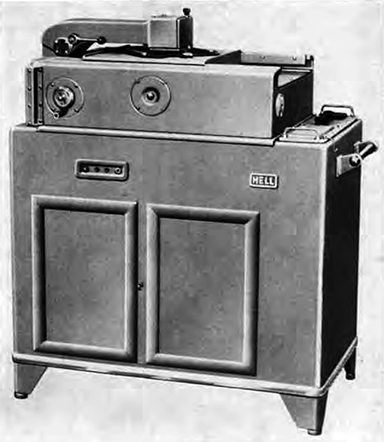
  • The original design of the KlischographKlischograph (1951): Hell first tested this device that scanned originals and converted them electronically into an engraved printing block. The Klischograph, which was released commercially to the newspaper industry in 1954, dramatically reduced the production time required to make halftone plates by combining three stages of production—film processing, screening and etching—into one operation.
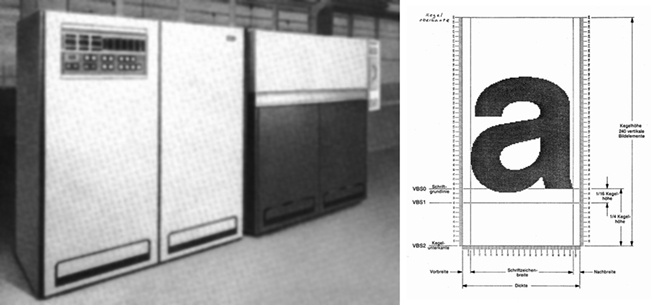
  • DigiSet Model T50 and the type character conceptDigiset (1956): In the early 1950s, Hell developed a technology called Digiset. Different from the technology of other phototypesetting equipment of the era—where complete characters are projected onto photographic material from a negative—the Digiset built each characters from digital elements and projected them onto a CRT and then this image was projected onto photosensitive material. With this system, Rudolf Hell invented the first “bitmap” fonts that would become standard technology in desktop publishing three decades later. The system was launched commercially in 1965.
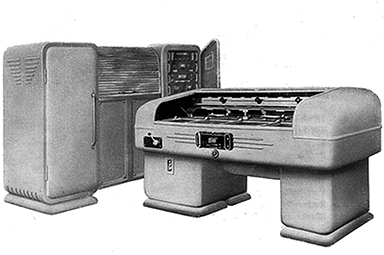
  • The original design of the flatbed ColorgraphColorgraph (1956): By the late 1950s technology firms were locked in an international race to invent an electronic scanning system that could produce process color separations. Rudolf Hell was well positioned to compete. He put significant resources into the development of a flatbed scanning system that could convert an original photographic transparency or print into fully color corrected separations all in one step. Hell launched the Colorgraph system commercially in 1958.
  • The original design of the Helio-KlischographHelio-Klischograph (1961): In October 1959, Hell was approached by a representative of a major German publishing company and asked to devise an electronic system for automated engraving of gravure cylinders. By 1960, Hell had developed a prototype system on a lathe that employed the Klischograph engraving head. Hell’s solution—that enabled mass production of gravure cylinders for illustration, decorative and packaging printing—was debuted at DRUPA in 1962. The Helio-Klischograph system replaced approximately ten separate manual steps in gravure cylinder preparation and is still in use today.
  • The original design of the ChromagraphChromagraph (1963): Throughout the 1960s, Hell perfected the successful scanning and cylinder technologies of the Klischograph and Colorgraph. Striving for the most advanced drum scanning technology of the era, Hell was in a rivalry with John Crosfield of London for the first system to market. By 1967, Rudolf Hell had filed a patent application for his daylight drum scanning technology and the Chromograph DC300 system was brought to market in 1970. Hell drum scanning technology became the standard for high quality color reproduction in the printing industry for the next three decades and some of these systems remain in use to this day.

These inventions taken as a whole represent a stage in the transition of print technology from the mechanical to the digital age. Later referred to as “proprietary” systems, the self-contained computerized solutions of Rudolf Hell—and others like Crosfield, Scitex and Linotype—in the 1950s, 60s and 70s were the precursors to the desktop publishing revolution of the mid-1980s.

Rudolf Hell, who is sometimes called the Thomas Edison of the graphic arts industry, continued to develop these early electronic technologies —along with others like the electronic page composition system called ChromaCom—right up to the 50th anniversary of his company in 1979.

Rudolph Hell retired from the management of his company but remained active as chairman of the board in 1972. In 1981, he sold the business to Siemens and became honorary chairman of the supervisory board. He officially retired in 1989 and the firm was sold again to Linotype creating the Linotype-Hell Company. The assets of Linotype-Hell were acquired by Heidelberg in 1996 and the technologies pioneered by Rudolf Hell were incorporated into the Heidelberg prepress and press systems.

Hell was the recipient of numerous accolades and honors during his lifetime including the Gutenberg Award (1977), Werner-von-Siemens Ring in recognition of achievements in the natural sciences and technology (1978) and Honorary Citizen of Kiel (1979) and a Kiel city street was named after him (2001).  Rudolf Hell died in Kiel on March 11, 2002 at 100 years old.