Bicycle lessons from the Jersey Shore

I remember every bicycle I ever had as a kid growing up in Point Pleasant, New Jersey. Not that I had that many. My parents were frugal and, with four children, they didn’t often spend money on things like bicycles. When they did, it was usually for something special like a birthday or Christmas gift. So, from my childhood to my early teen years, I had a total of three bikes.

The first one was a hand-me-down from my older brother. It was a very plain, red boys bike with chrome fenders, white wall tires and a coaster break. As with most people, the day I learned to ride that two-wheeler stands out in my memory. With the help of my dad and some neighborhood kids, I peddled away miraculously on my own in front of our house at 1526 Treeneedle Road. It was the summer of 1967.

Having your own bicycle—especially one you were proud of—was one of the first things in life that got a kid going on being independent from their parents. Initially, maybe you were allowed to ride to the end of the block and back. Later maybe you were allowed to stay out past dark on your bike with the other kids from the neighborhood.

Then, once all of the rules had been explained, you were allowed to ride your bike all the way around the block. Back then, the rules did not involve wearing a helmet, elbow and knee pads, using hand signals to make turns or stops or even riding with the car traffic on the right side of the road. If those things even existed, we didn’t know about them.

No, the main thing was this: you were to only ride around the block and go nowhere else; you were to do this once and the next time you wanted to do it, you needed to ask again. Permission to ride around the block was a one-time arrangement.

For me, my first time around the block was a big deal. I road south on Treeneedle, east on Little Hill, north on Northstream, west on Apple Place and back south onto Treeneedle. I saw some kids I did not know; I saw other kids that I had heard about but never met before; I saw some kids I knew from school who lived in the next neighborhood over.

The feeling I had that day was like I was on top of the world. Even though the ride was just a half-mile and took around five minutes, it seemed to me to be a long trip. I was so proud that my parents trusted me enough to let me do what I really wanted to do. In that moment, as a seven-year-old, it seemed like all things were possible.

A short time thereafter, one of the older neighborhood boys showed me how to ride my bike with no hands. This was a skill that many boys (and some girls, too) learned and showed off. Normally, when riding a two-wheeler, your upper body is hunched over while holding on to the handlebars. When you ride with no hands, your body is upright and you can see everything quite nicely; there is no need to worry about anything. Also, when you rode in this position, the other kids could see you coming and knew immediately that you were peddling with no-hands.

Then one day, after ignoring repeated warnings that I was in for disaster, I took a major spill on Little Hill Road. I struck a driveway curb and toppled head-over-heels and landed square on my face. Worse than running home crying with my bike in tow, was the nasty scrape down the center of my forehead, nose, lips and chin. I looked in the mirror and thought to myself, “you really did it now.” That scrape took weeks to heal and was a constant reminder of the risks involved in dangerous bike behavior.

Anyway, by the time I got my first brand new bike as a Christmas gift, the style everyone wanted was inspired by the Schwinn Sting-Ray. These bikes had a banana seat, “ape hanger” handlebars and the all-important sissy bar. By the late 1960s, the Schwinn Sting-Ray was everywhere and all the other bicycle manufacturers were trying copy the low-rider, wheelie style. So, the kids who had a Sting-Ray with a high-loop sissy bar were the envy of the entire neighborhood.

My parents were concerned about the behaviors they feared would come along with these bikes. Being that they looked like motorcycles, they thought that Sting-Rays would bring a kind of “biker” culture to the neighborhood. Secondly, my parents knew that we were completely fearless and would try various dangerous tricks on these bikes like popping wheelies, brake skidding, ramp jumping and other stunts.

In the end, my Christmas bike was a three-speed, Sting-Ray knock-off with front and rear hand breaks. I’m not sure, but I think it may have come from K-Mart. Although I was disappointed, I was glad to have a brand new bike that had good colors and chrome and looked pretty cool.

One of the unique features of this bike was the way the handle bars were constructed. Instead of a continuous bar that slid through a clamp on the stem, the two bars were welded to a flat piece of metal that was bolted to the stem. While this design gave my bike a very distinctive look, it also created a problem.

As mentioned, one of the things we preteens did was build ramps out of scraps of wood and cinder blocks for jumping. This was around 1970 before BMX stunt riding and free-styling existed. I guess the kind of thing we were doing back then (along with other kids around country) eventually led to the creation of off-road sport bicycling and competition.

Well, a group of us put together a ramp made of a sheet of plywood laid on an angle to a stack of cinder blocks. We put the entrance to the ramp on the edge of our driveway and the lift-off point—which was about a foot and a half above ground—was in the front lawn. Since we knew there would be wipeouts, these would happen in the grass and not the pavement.

The object was to get your bike up to full speed and hit the ramp just right. At lift off, you’d yank the front end of your bike up just enough so that, when you came down, the rear tire touched first followed by the front wheel. We had a great time doing these jumps even though there were quite a few crashes.

After multiple jumps with my new bike, I started to notice a crack in the handle bar welding. I couldn’t imagine anything bad happening so I kept at it. On one jump, the bars snapped clean off the clamp and I went flying akimbo through the air onto the grass. You would have thought that my friends would have rushed to my aid or been concerned for the condition of my new bike. But no; we all burst out into uncontrollable laughter. This proved to be one of the funniest things that ever happened to me.

By the time I was in middle school, my parents began letting me ride my bike just about anywhere in Point Pleasant. For my thirteenth birthday, they bought me a black, 5-speed Raleigh Chopper Mark 2. This was a bike that I wanted more than anything. I remember the day my dad took me to pick it out at Point Pleasant Bicycle Shop on Arnold Avenue just this side of the border with Point Beach.

That Chopper was the envy of every kid because, even though it was not a fast bike, it was a wheelie bike that had a chunky, low-rider look: high-rise handle bars, a ribbed banana seat with sissy-bar, a T-bar gear shifter and redline sidewall tires. It was the signature smaller 16” diameter front wheel that really made the Chopper look different. I loved that bicycle more than anything I ever had in my life up to that point.

When I road it around town I was proud and told everyone that my parents bought it for me. I really took good care of it, too. We had a shed in the backyard where I kept it. I also had a bike lock to make sure it didn’t get stolen when I rode to school or other places around town.

I rode my Chopper everywhere: to the waterfront at Dorset Dock, over the Beaver Dam bridge onto the Princeton Avenue waterfront. There were many trips to the Manasquan River: out to the marina at Kings Grant Inn at Route 70 and to the beaches at Maxson and River Avenue. Clark’s Landing off of Arnold Avenue was also a regular meet up point.

Sometimes I would ride the full length of Bridge Avenue, from the end of the four lane extension all the way over the Lovelandtown Bridge and down through Bay Head to the ocean. I also made many trips in both directions across the old bascule lift bridge on Route 88. All the kids on bikes would line up at the stop barrier and wait for the gate to open after the bridge closed. We would get a running start and be more than halfway across before the cars could pass us.

And, since I had friends all over town, those Chopper wheels probably covered just about every road and street in Point Boro. Aside from the highways, I knew all of the main roads like Dorset Dock, Beaver Dam, Herbertsville, River Road and River Avenue, Bay Avenue and Arnold Avenue like the back of my hand.

Those were indeed some fantastic days in the summer of 1973. It seemed at the time like it would go on forever. But that kind of carefree biking would soon come to an end. I outgrew my Chopper when I started working summer jobs at age 14 and needed a more practical mode of transportation. By the mid 1970s, the Schwinn Continental 10-speed with ram’s horn handlebars, auxiliary break levers and two sets of derailleurs had become a popular bike among teens.

Nevertheless, the things I learned about biking during those early years will always remain with me: Be thankful to have a bike at all and be proud to ride it; Take care of your bike and don’t take dangerous risks when riding it; Get out and explore the world around you—you never know who you might meet or run into on your first ride around the block.
On Benjamin Franklin’s 313th birthday: The continuing public importance of printed books

The following introductory remarks were delivered to the 36th Annual Michigan Printing Week Association Ben Franklin Awards Dinner on Tuesday, January 15, 2019.

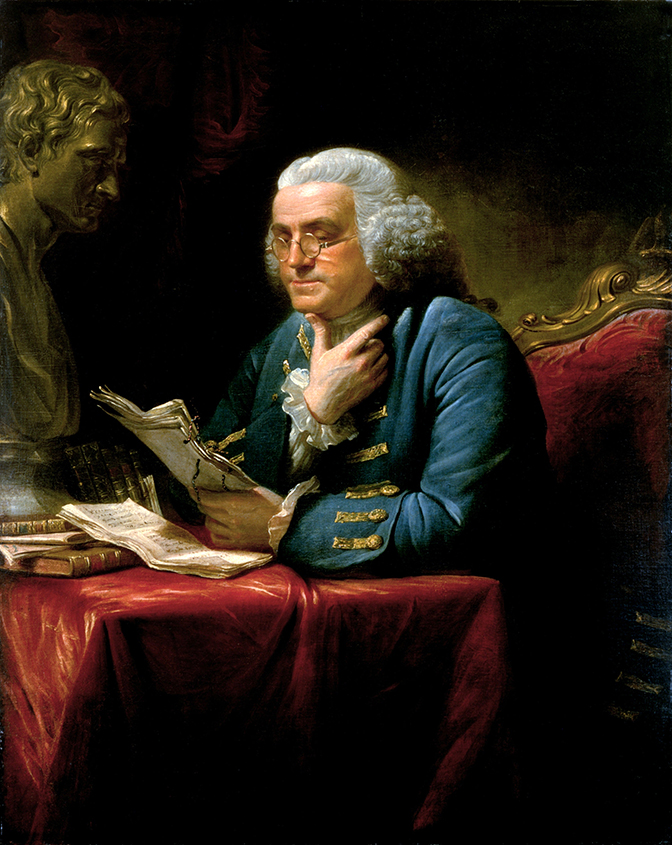
A portrait of Benjamin Franklin at his study in London in 1767

Good Evening,

On behalf of the Printing Industries of Michigan and the Michigan Printing Week Committee, I would like to welcome you to the Annual Ben Franklin Awards Dinner.

My name is Kevin Donley and it is once again my privilege to serve as your Master of Ceremonies this evening.

We are meeting tonight for the 36th year to acknowledge the contributions of our industry colleagues and to raise money for the education of a new generation of printing professionals.

Tonight, we will be recognizing Admore as Company of the Year and William Kessler as Individual of the Year recipients of the Ben Franklin Award. We will also be recognizing two graphic arts students who are deserving recipients of the Ben Franklin college scholarships.

This year we mark Benjamin Franklin’s 313thbirthday. As always, it is appropriate to take a few moments to look back on Franklin’s life for the benefit of both inspiration and, by connecting our own time to his, for insight.

As many of you know, one of Ben Franklin’s enduring contributions was the establishment of the first public library. At the age of just twenty-five, Franklin and a group of his tradesmen friends—who were members of a debating club called the Junto—established what would become The Library Company of Philadelphia, an institution that exists to this day.

Among other things, Franklin believed that the only way to settle debates during the Friday night Junto meetings was to consult authoritative printed texts. In this way, the Junto library became something of a colonial version of what we know today as fact checking.

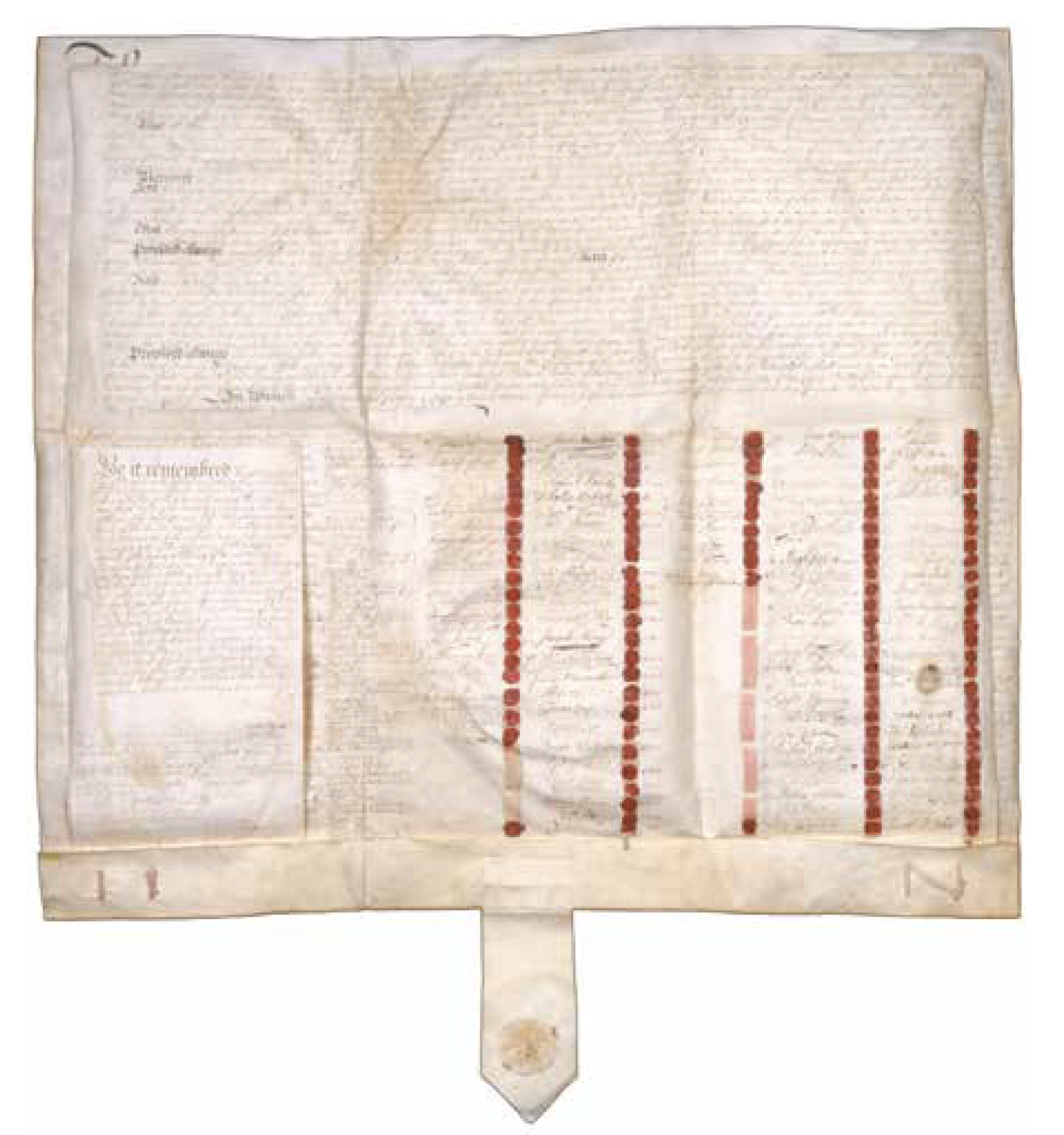
Franklin drafted the Articles of Association for the The Library Company of Philadelphia and they were signed by 40 subscribers and dated July 1, 1731

However, at that time, standard English reference works were very expensive and hard to find in colonial America. At Franklin’s suggestion the group decided to pool their resources and signed up fifty subscribers who invested 40 shillings and then agreed to pay ten shillings per year for fifty years thereafter. They bought books and rented the facilities needed to establish and maintain the first American lending library.

If you were a subscriber, you could borrow the books in the library. If you were a member of the public, you were able to come into the library and read the books available in the collection.

For Ben Franklin, who never took credit for the idea, there was much more to the library than settling matters of opinion and debate. From the time he was a teenager and throughout his entire life, Franklin was in pursuit of his own intellectual development and education. He also consistently shared and encouraged the same among his fellow citizens.

As Franklin wrote in his autobiography, “these libraries have improved the general conversation of Americans, made the common tradesmen and farmers as intelligent as most gentlemen from other countries, and perhaps have contributed in some degree to the stand so generally made throughout the colonies.”

In other words, writing these lines toward the end of his life, Franklin saw a connection between the public lending of books to the average citizens, the level of discourse within the colonies and the movement for American independence.

Books. Ben Franklin was talking about the importance of books. We always have to remember that—even though many of us are involved in marketing and promotional printing today—our industry is connected with this history; that our industry is rooted in great traditions associated with literacy and public awareness and the sharing and spreading of great ideas.

Here in Michigan, we know something about books. Despite some challenges we have faced recently in our local book manufacturing capacity, we remain a major producer of printed books for publishers across the country and around the world.

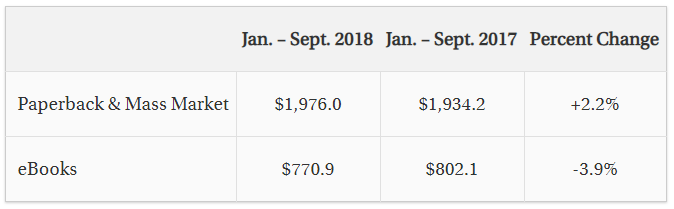
Now, after more than a decade of speculation about the imminent death of print brought on by electronic technologies, trade book sales have increased for five years in a row. Meanwhile, the number of independent book stores has grown by 40% over the past ten years.

What’s more, while the number of printed books has been growing again, sales of eBooks—and especially children’s eBooks—have been declining by double digits every year since 2015.

What does this mean? Are we going back to the days prior to the personal computer and the Internet when going to the library or the encyclopedia was the only way to consult authoritative texts? Of course not. It should be pointed out, for example, that the growth of printed book sales can be traced entirely to one retail company: Amazon.

In any case, there is an ongoing public thirst for printed books. Part of this attraction is reading for entertainment and reading as part of a social experience. It has been reported, for instance, that Instagram is partially responsible for the growth of indie bookstores. Using the hashtag #bookstagram, 25 million photos of bookstores have been shared on Instagram. People are being drawn to these boutique bookshops to find the perfect match for their reading style and subject interests.

Another part of this loyalty to printed books is that people are increasingly today—as in Ben Franklin’s time—looking to settle arguments and answer the big questions of our time.

As for the preference for printed books over eBooks, it turns out that we all have something called “spatial orientation memory” that is hard-wired into our brains. This particular type of memory is the part of human psychophysiology that helps us locate where we are in the broader immediate context.

When we read a book, we are subconsciously relying on the tactile experience of our location on a page and within the chapters of a book. This is one of the key aspects of how we remember what we have read; spatial orientation memory is an enabler of reading comprehension and retention.

What all of this shows is that ink-on-paper print still holds tremendous authority and value with the public. While people are excited about the latest gadgetry, they are also understanding more and more clearly that learning and education, especially the teaching of children, depends upon a full sensory engagement with books. This is an experience that cannot today be, as of yet, duplicated by electronic devices and digital displays.

This dependent relationship of the public upon print also extends into the realm of information, marketing and communications. After a decade of enthusiasm and hype about the benefits of digital and social media, the ongoing problems associated with the credibility of these formats is driving renewed interest in print.

Study after study has proven that response rates for direct mail are magnitudes greater than email and social advertising. The public, including old-timers like me as well as millennials, go to the mail box each day with anticipation. We remember what we see there because we engage physically with it, even if it goes within seconds from our hands to the wastebasket.

So, it is on this note of optimism about our great printing industry that we will begin our award presentations this evening. Thank you very much for allowing me to introduce the 2019 Ben Franklin Awards Dinner!

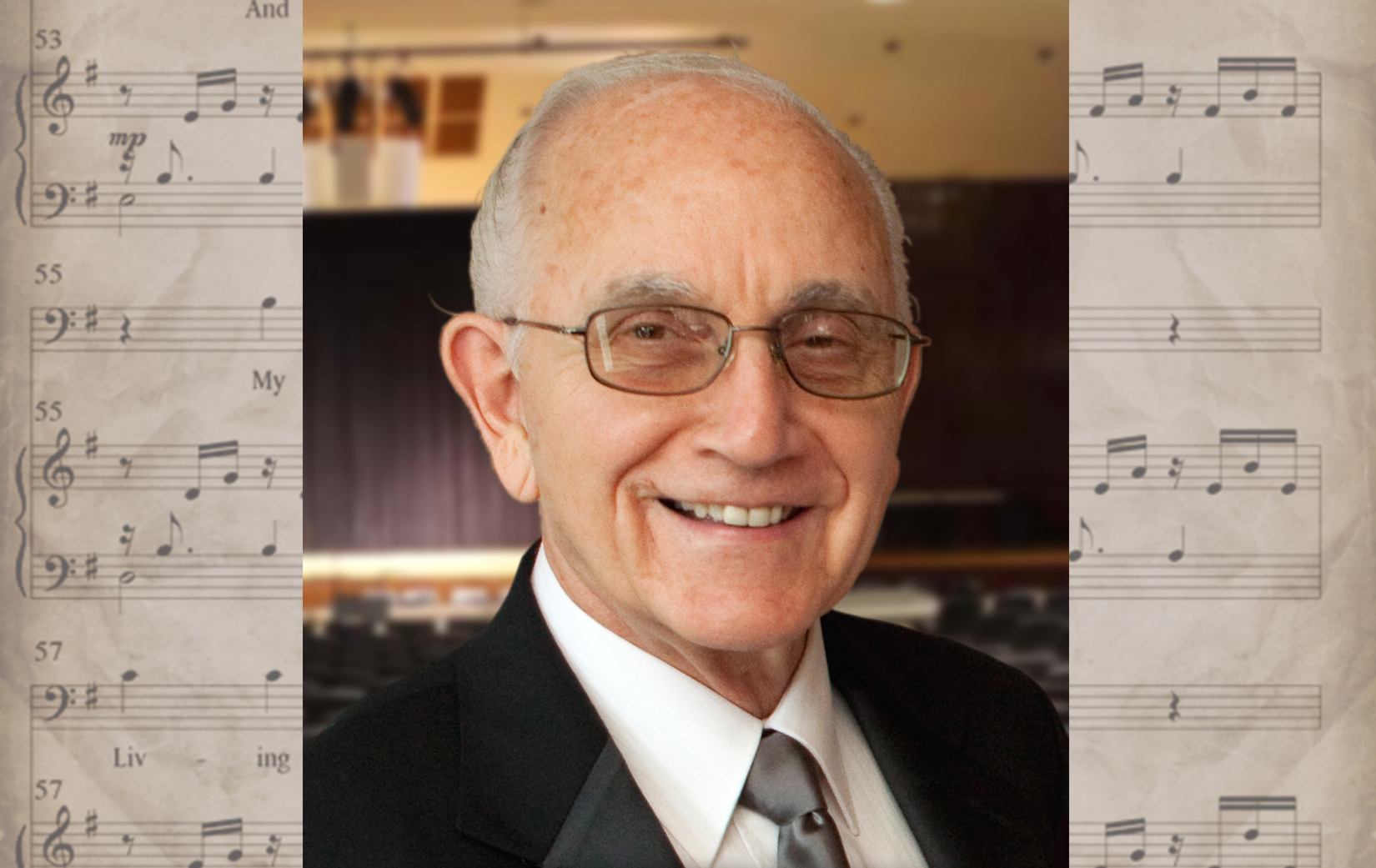
Loren D. Donley: Family, Music & Life

The following remarks were made on behalf of the Donley family at “A Musical Celebration of Life” memorial for my late father Loren D. Donley on Sunday, October 1, 2017 at Point Pleasant Borough High School, in Point Pleasant, New Jersey.

My name is Kevin Donley and I am the second son of Loren Donley. I am truly proud to stand before you today and give remarks on behalf of the Donley family at this, “Musical Celebration of Life‚“ for my late father, Mr. Loren D. Donley. This is indeed a fitting celebration and I want to thank each and every one of you for being here this afternoon to remember and honor with music an extraordinary man that we loved and who deeply touched all of our lives. I want to express special thanks to all of those who prepared this celebration and are making it available on social media. In particular, I want thank Mrs. Muraglia, who put so much effort and time into making this event possible.

I would like to begin by introducing to you my family members who have in many cases traveled long distances to be here today:

First of all, we have my dad’s loving wife Lynn, from Jupiter, Florida Lynn’s two daughters Shalon with her husband Ray Weinel from Carmi, Illinois and Jacque Young with her fiancé Charlie Ingram from Westminster, Colorado. We also have Lynn’s brother Steve Appel from Encindas, California and Lynn’s sister Kim with her husband, Dave Hanrahan from Point Pleasant. We have my older brother Mark, with his wife Cheryl and their three sons Eric, Scott and David from Toms River, New Jersey;My younger brother Dana, his wife Margaretta and their son Aidan from Novi, Michigan; My sister Cheryl, her husband Don Warren and their son Zachary and daughter Rebecca from Cuyahoga Falls, Ohio. Don and Cheryl’s middle child Matthew cannot be here today because he is serving in the US Army and stationed in the United Arab Emirates. My wife Denise and my youngest son Brian are here with me from Southfield, Michigan. My two older sons Brandon who lives in Pontiac, Michigan and Brent who lives in Dallas, Texas are not able to be here today.

I also want to recognize our first cousins from the Fisher family, Debbie, Barry and Melanie, who are here with their families and they have traveled from Coshocton, Ohio and Fort Lauderdale, Florida. Their mother is my father’s sister Glenna who many of you know as Mrs. Fisher the music teacher for many years at Ocean Road School. Glenna is 90 years old and could not make the trip today. She lives in Coshocton, Ohio near Debbie and Barry. Lastly, we have my cousins Bob Blake and his family from Linwood, New Jersey and Ben Reinke from Washington, DC.

* * * * *

I am the first of the Donley children to be born in Point Pleasant and I am old enough to remember the early days of the high school before there were any choral facilities to speak of. I have many fond memories of my father both at the old Ocean Road School and here at the high school before the performing arts wing was built. This auditorium and stage bring back many memories for me as I was in chorus, band and theater and performed here with my dad many times in the 1970s. My first appearance on this stage was as a middle schooler and part of the cast of “Fiddler on the Roof” in 1973, the first high school play to be performed in this auditorium.

I remember in the mid-1960s when I was in elementary school across the street—at that time Memorial School was Kindergarten through 3rd grade—I would come with my dad to the high school early in the morning. I helped him push the piano down the hall to one of the classrooms across from the cafeteria. He would let me sit at the piano with him and listen to the students as they practiced their choral music. It was truly the most uplifting experience for me and I was the proudest little 5 or 6 year old you could imagine since everyone knew that I was Mr. Donley’s son. After those morning rehearsals he would take my hand and walk me across the street to school.

* * * * *

In celebrating and remembering the life of my father, it is natural for us to do so through the prism of our own experience. However, I think it is necessary to take a step back and view his life in a broader context. When I think of my father today and consider his entire 83 years, three things stand out for me: Family, Music and Life. I would like to take a few moments to explain these things and I hope to shed some light on both why and how my father was the man that we loved so much.

Family

Everyone who knew Loren Donley, knows that family was at the center of his life. He learned about the importance of family from his own parents Daisy and Millard Donley during his upbringing in Belmont County, Ohio. Some of you may know that my dad occasionally referred to himself as a “hillbilly.” This was not a derogatory term, but his way of recognizing the connection he had to the folks that lived in the hills across the Ohio River from Wheeling, West Virginia.

Actually, the strength of the Donley family ties go back many generations and are rooted in deep traditions. Our family comes from an area of Appalachia in eastern Ohio that was settled at the beginning of the 19th century by immigrants from the Scottish Highlands. They came to America seeking prosperity and a place to practice their Protestant doctrine without persecution. They established their farms and communities around Presbyterian and Methodist churches. This area became known as Scotch Ridge due to the concentration of Scottish and Irish immigrants that made this place their home.

It was here that the ancestors of Loren Donley instilled in their children and grandchildren the principles of faith, family, love, respect for the ideas others and a very pronounced egalitarianism. It should be mentioned that many of the Scotch-Irish families that settled in this region of Ohio were supporters of the Underground Railroad and opponents of slavery. In fact, the Donley family counts among its ancestors Henry H. Mason of Hog Run, West Virginia who at age 19 joined the Union Army during the Civil War and was later captured by Confederate troops and imprisoned at Andersonville, Georgia. A decade after the war, Henry died at age 34 from the ailments he suffered during his imprisonment.

All of these traditions were present when my dad was born in 1934 in the small town of Shadyside, Ohio during the Great Depression. He was the youngest of the four children of Millard and Daisy. Times were very difficult for the Donley family as they were for everyone during those years. My Grandpap Donley had worked as a coal miner and a railroad caboose-man and eventually became a steel worker at the Wheeling Steel mill in Yorkville, Ohio. The Donleys survived these rough times by relying upon the support of their extended family.

Throughout the years of the Depression and World War II, my dad was a model of good behavior. When I was young, I recall asking my Grandma Donley what kind of child my dad had been when he was growing up. She would always tell me, “Your dad was the perfect lad and he never once got into any kind of trouble at all.” Well, since I had accumulated a lengthy resumé of trips to the woodshed already, I thought to myself‚ “Gee Willickers Kevin, you are really off to a bad start.”

Music

My dad’s love of music and education stems from these same family traditions and it is no accident that he became a music teacher along with his two sisters Carol and Glenna. My grandmother was a school teacher and a public school principal. My grandfather, like my dad after him, had the gift of a golden baritone singing voice and loved to sing forthrightly in church. As my dad became active in the vocal and instrumental music in high school, his interest in choral music and conducting was born.

After high school graduation, he decided to pursue his love of music first at Kent State University and then as a graduate student at The Ohio State University. While other young people of his generation were listening to Elvis Presley, Loren Donley was in the university library studying liturgical choral music and preparing to become a schoolteacher.

His path to Point Pleasant came through his enlistment in the US Army following college. He was stationed at Fort Dix, NJ for basic training and upon completion of his obligation got the opportunity from district superintendent Dr. Lawrence DeBellis to become the music teacher at Ocean Road School in 1959.

I will leave it to the other speakers today to talk more about my father’s role here at the high school as a teacher. I would only say, as one of his students, that we learned to appreciate some of the greatest choral music ever written, we learned about folk music, we learned gospel music, we frequently sang in Latin and we even learned the right way to sing pop music on occasion. These are things that made all of our lives culturally more rich and, I believe, demonstrate the value of music in the public schools.

Life

I would like to close with something that I truly admired about my dad and it is something that I think we should all remember. My father was a man of very strong moral convictions and principles of faith that he learned while growing up. I would ask you to picture in your mind this young man from Ohio who at the age of 25 arrived at the Jersey Shore in the late 1950s. There is no question that he experienced what we might refer to today as “culture shock.”

Yet, as was in some ways inevitable, my dad changed over the years. But he changed without ever compromising his core values. He remained the same approachable, kind, helpful, reserved and hard working man who loved his family, loved music and loved his students all the way through to the end. He was able to find his way and in the process had a lasting impact and left a legacy in this community. This event today is proof of that fact.

I want everyone here and everyone watching this event online to know that my father was very proud of his students, that he cherished the relationships he had with the teachers, administrators and staff here at the high school, that he loved directing and singing in the choir at Point Pleasant Presbyterian Church and he always enjoyed hearing from you over the years. I want you to know that as much as he influenced your lives, you also influenced his.

Thank you very much.