Adrian Frutiger (1928–2015): Univers and OCR-B

Adrian Frutiger: May 24, 1928 – September 10, 2015

Adrian Frutiger died on September 10, 2015 at the age of 87. He was one of the most important type designers of his generation, having created some 40 fonts, many of them still widely used today. He was also a teacher, author and specialist in the language of graphic expression and—since his career spanned metal, photomechanical and electronic type technologies—Frutiger became an important figure in the transition from the analog to the digital eras of print communications.

Frutiger was born on May 24, 1928 in the town of Interseen, near Interlaken and about 60 kilometers southeast of the city of Bern, Switzerland. His father was a weaver. As a youth, Adrian showed an interest in handwriting and lettering. He was encouraged by his family and secondary school teachers to pursue an apprenticeship rather than a fine arts career.

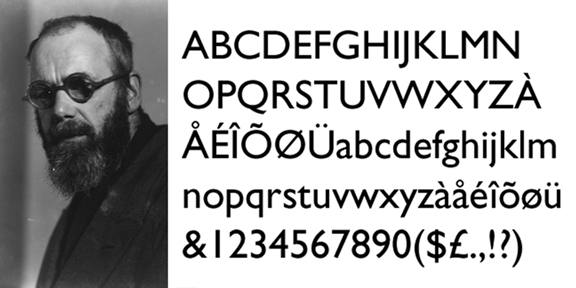
Adrian Frutiger around the time of his apprenticeship

At age 16, Adrian obtained a four-year apprenticeship as a metal type compositor with the printer Otto Schlaeffli in Interlaken. He also took classes in drawing and woodcuts at a business school in the vicinity of Bern. In 1949, Frutiger transferred to the School of Applied Arts in Zürich, where he concentrated on calligraphy. In 1951, he created a brochure for his dissertation entitled, “The Development of the Latin Alphabet” that was illustrated with his own woodcuts.

It was during his years in Zürich that Adrian worked on sketches for what would later become the typeface Univers, one of the most important contributions to post-war type design. In 1952, following his graduation, Frutiger moved to Paris and joined the foundry Deberny & Peignot as a type designer.

During his early work with the French type house, Frutiger was engaged in the conversion of existing metal type designs for the newly emerging phototypesetting technologies. He also designed several new typefaces— Président, Méridien, and Ondine—in the early 1950s.

San serif and Swiss typography

San serif type is a product of the twentieth century. Also known as grotesque (or grotesk), san serif fonts emerged with commercial advertising, especially signage. The original san serif designs (beginning in 1898) possessed qualities—lack of lower case letters, lack of italics, the inclusion of condensed or extended widths and equivalent cap and ascender heights—that seemingly violated the rules of typographic tradition. As such, these early san serif designs were often considered too clumsy and inelegant for the professional type houses and their clients.
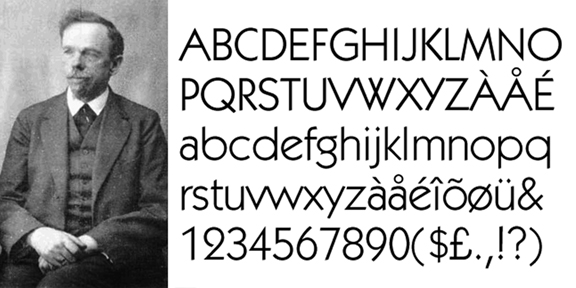
Rudolf Koch, Kabel, 1927
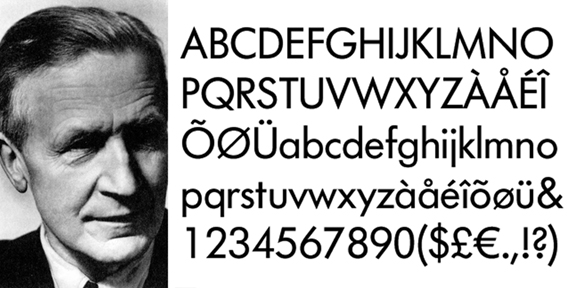
Paul Renner, Futura, 1927
Eric Gill, Gill Sans, 1927

Along with the modern art and design movements of the early twentieth century, a reconsideration of the largely experimental work of the first generation of sans serif types began in the 1920s. Fonts such as Futura, Kabel and Gill Sans incorporated some of the theoretical concepts of the Bauhaus and DeStijl movements and pushed sans serif to new spheres of respectability.

However, these fonts—which are still used today—did not succeed in elevating san serif beyond headline usage and banner advertising and into broader application. Sans serif type remained something of an oddity and not yet accepted by the traditional foundry industry as viable in terms of either style or legibility.

In the 1930s, especially within the European countries that fell to dictatorship prior to and during World War II, there was a backlash against modernist conceptions. Sans serif type came under attack, was derided as “degenerate” and banned in some instances. Exceptions to this trend were in the US, where the use of grotesque types was increasing, and Switzerland, where the minimalist typographic ideas of the Bauhaus were brought by designers who had fled the countries ruled by the Nazis.
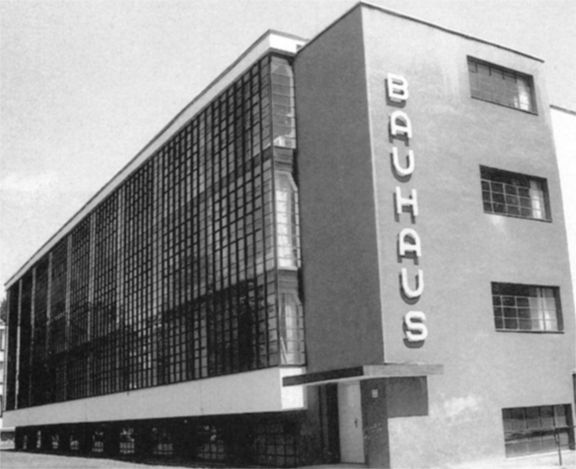
The Bauhaus School, founded in 1919 in Weimar, Germany, was dedicated to the expansion of the modernist esthetic

After the war, interest in sans serif type design was renewed as a symbol of modernism and a break from the first four decades of the century. By the late 1950s, the most successful period of san serif type opened up and the epicenter of this change emerged in Switzerland, signified by the creation of Helvetica (1957) by Eduard Hoffmann and Max Miedinger of the Haas Type Foundry in Münchenstein.

It was the nexus of the creative drive to design the definitively “modern” typeface and the possibilities opened up by the displacement of metal type with phototypesetting that brought san serif from a niche font into global preeminence.

Frutiger’s Univers

This was the cultural environment that influenced Adrian Frutiger as he set about his work on a new typeface as a Swiss trained type designer at a French foundry. As Frutiger explained in a 1999 interview with Eye Magazine, “When I came to Deberny & Peignot in Paris, Futura (though it was called Europe there) was the most important font in lead typesetting. Then one day the question was raised of a grotesque for the Lumitype-Photon [the first phototypesetting system]. …

“I asked him [Peignot] if I might offer an alternative. And within ten days I constructed an entire font system. When I was with Käch I had already designed a thin, normal, semi-bold and italic Grotesque with modulated stroke weights. This was the precursor of Univers. … When Peignot saw it he almost jumped in the air: ‘Good heavens, Adrian, that’s the future!’ ”
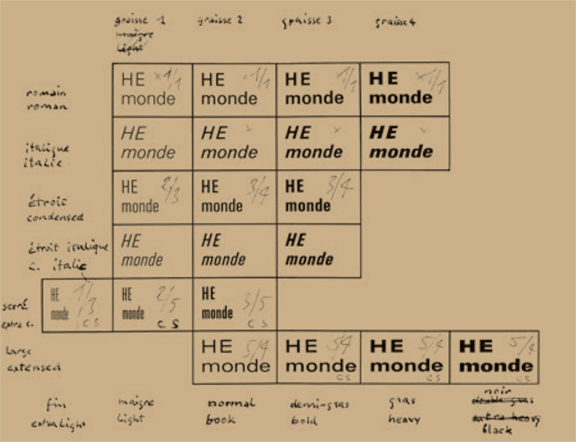
An early diagram of Frutiger’s Univers in 1955 shows the original name “Monde”
Final diagram of Frutiger’s 21 styles of Univers in 1955

Originally calling his type design “Monde” (French for “world”), Frutiger’s innovation was that he designed 21 variations of Univers from the beginning; for the first time in the history of typography a complete set of typefaces were planned precisely as a coherent system. He also gave the styles and weights a numbering scheme beginning with Univers 55. The different weights (extended, condensed, ultra condensed, etc.) were numbered in increments of ten, i.e. 45, 65, 75, 85 and styles with the same line thickness were numbered in single digit increments (italics were the even numbers), i.e. 53, 56, 57, 58, 59, etc.

Univers was released by Deberny & Peignot in 1957 and it was quickly embraced internationally for both text and display type purposes. Throughout the 1960s and 70s, like Helvetica, it was widely used for corporate identity (GE, Lufthansa, Deutsche Bank). It was the official promotional font of the 1972 Munich Olympic Games.

Frutiger explained the significance of his creation in the interview with Eye Magazine, “It happened to be the time when the big advertising agencies were being set up, they set their heart on having this diverse system. This is how the big bang occurred and Univers conquered the world. But I don’t want to claim the glory. It was simply the time, the surroundings, the country, the invention, the postwar period and my studies during the war. Everything led towards it. It could not have happened any other way.”

Computers and digital typography

Had Adrian Frutiger retired at the age of 29 after designing Univers, he would have already made an indelible contribution to the evolution of typography. However, his work was by no means complete. By 1962, Frutiger had established his own graphic design studio with Bruno Pfaffli and Andre Gurtler in Arcueil near Paris. This firm designed posters, catalogs and identity systems for major museums and corporations in France.

Throughout the 1960s, Frutiger continued to design new typefaces for the phototypesetting industry such as Lumitype, Monotype, Linotype and Stempel AG. Among his most well-known later san serif designs were Frutiger, Serifa and Avenir. Frutiger’s font systems can be seen to this day on the signage at Orly and Charles de Gaulle airports and the Paris Metro.

The penetration of computers and information systems into the printing and publishing process were well underway by the 1960s. In 1961, thirteen computer and typewriter manufacturers founded the European Computer Manufacturers Association (ECMA) based in Geneva. A top priority of the EMCA was to create an international standard for optical character recognition (OCR)—a system for capturing the image of printed information and numbers and converting them into electronic data—especially for the banking industry.

By 1968, OCR-A was developed in the US by American Type Founders—a trust of 23 American type foundries—and it was later adopted by the American National Standards Institute. This was the first practically adopted standard mono-spaced font that could be read by both machines and the human optical system.

However, in Europe the ECMA wanted a font that could be used as an international standard such that it accommodated the requirements of all typographic considerations and computerized scanning technologies all over the world. Among the issues, for example, were the treatment of the British pound symbol (£) and the Dutch IJ and French oe (œ) ligatures. Other technical considerations included the ability to integrate OCR standards with typewriter and letterpress fonts in addition to the latest phototypesetting systems.

Comparison of OCR-A (1968) with Frutiger’s OCR-B (1973)

In 1963, Adrian Frutiger was approached by representatives of the ECMA and asked to design OCR-B as an international standard with a non-stylized alphabet that was also esthetically pleasing to the human eye. Over the next five years, Frutiger showed the exceptional ability to learn the complicated technical requirements of the engineers: the grid systems of the different readers, the strict spacing requirements between characters and the special shapes needed to make one letter or number optically distinguishable from another.

In 1973, after multiple revisions and extensive testing, Adrian Frutiger’s OCR-B was adopted as an international standard. Today, the font can be most commonly found on UPC barcodes, ISBN barcodes, government issued ID cards and passports. Frutiger’s OCR-B font will no doubt live on into the distant future—alongside various 2D barcode systems—as one of the primary means of translating analog information into digital data and back again.
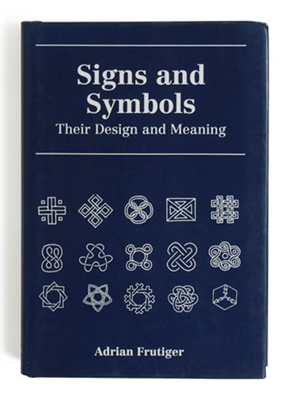
Frutigers Sign and Symbols 1989
Frutiger’s 1989 English translation of “Signs and Symbols: Their Design and Meaning”

Adrian Frutiger’s type design career extended well into the era of desktop publishing, PostScript fonts and the Internet age. In 1989, Frutiger published the English translation of Signs and Symbols: Their Design and Meaning a theoretical and retrospective study of the two-dimensional expression of graphic drawing with typography among its most advanced forms. For someone who spent his life working on the nearly imperceptible detail of type and graphic design, Frutiger exhibited an exceptional grasp of the historical and social sources of man’s urge toward pictographic representation and communication.

As an example, Frutiger wrote in the introduction to his book, “For twentieth century humans, it is difficult to imagine a void, a chaos, because they have learned that a kind of order appears to prevail in both the infinitely small and the infinitely large.  The understanding that there is no element of chance around or in us, but that all things, both mind and matter, follow an ordered pattern, supports the argument that even the simplest blot or scribble cannot exist by pure chance or without significance, but rather that the viewer does not clearly recognize the causes, origins, and occasion of such a ‘drawing’.”

Hermann Zapf (1918–2015): Digital typography

Hermann Zapf: November 8, 1918 – June 4, 2015

On Friday, June 12, Apple released its San Francisco system font for OSX, iOS and watchOS. Largely overlooked amid the media coverage of other Apple product announcements, the introduction of San Francisco was a noteworthy technical event.

San Francisco is a neo-grotesk, sans serif and Pan European typeface with characters in Latin as well as Cyrillic and Greek scripts. It is significant because it is the first font to be designed specifically for all of Apple’s display technologies. Important variations have been introduced into San Francisco to optimize its readability on Apple desktop, notebook, TV, mobile and watch devices.

It is also the first font designed by Apple in two decades. San Francisco extends Apple’s association with typographic innovation that began in the mid-1980s with desktop publishing. From a broader historical perspective, Apple’s new font confirms of the ideas developed more than fifty years ago by renowned calligrapher and type designer Hermann Zapf. Sadly, Zapf died at the age of 96 on June 4, 2015 just one week before Apple’s San Francisco announcement.

Hermann Zapf’s contributions to typography are extensive and astonishing. He designed more than 200 typefaces—the popular Palatino (1948), Optima (1952), Zapf Dingbats (1978) and Zapf Chancery (1979) among them—including fonts in Arabic, Pan-Nigerian, Sequoia and Cherokee. Meanwhile, Zapf’s exceptional calligraphic skills were such that he famously penned the Preamble of the Charter of the United Nations in four languages for the New York Pierpont Morgan Library in 1960.

Preamble of the charter of The United Nations
Zapf’s calligraphic skills were called upon for the republication of the Preamble of the UN Charter in 1960 for the Pierpont Morgan Library in New York City.

While he made many extraordinary creative accomplishments—far too many to list here—Hermann Zapf’s greatest legacy is the way he thought about type and its relationship to technology as a whole. Herman Zapf was among the first and perhaps the most important typographers to theorize about the need for new forms of type driven by computer and digital technologies.

Early life

Hermann Zapf was born in Nuremburg on November 8, 1918 during the turbulent times at the end of World War I. As he wrote later in life, “On the day I was born, a workers’ and soldiers’ council took political control of the city. Munich and Berlin were rocked by revolution. The war ended, and the Republic was declared in Berlin on 9 November 1918. The next day Kaiser Wilhelm fled to Holland.”

At school, Hermann took an interest in technical subjects. He spent time in the library reading scientific journals and at home, along with his older brother, experimenting with electronics. He also tried hand lettering and created his own alphabets.

Hermann left school in 1933 with the intention of becoming an engineer. However, economic crisis and upheaval in Germany—including the temporary political detention of his father in March 1933 at the prison camp in Dachau—prevented him from pursuing his plans.

Apprentice years

Barred from attending the Ohm Technical Institute in Nuremberg for political reasons, Hermann sought an apprenticeship in lithography. He was hired in February 1934 to a four-year apprenticeship as a photo retoucher by Karl Ulrich and Company.

In 1935, after reading books by Rudolf Koch and Edward Johnson on lettering and illuminating techniques, Hermann taught himself calligraphy. When management saw the quality of Hermann’s lettering, the Ulrich firm began to assign him work outside of his retouching apprenticeship.

Hermann refused to take the test at his father’s insistence on the grounds that the training had been interrupted by many unrelated tasks. He never received his journeyman’s certificate and left Nuremburg for Frankfurt to find work.

Zapf’s Gilgengart designed originally in 1938

Zapf started his career in type design at the age of 20 after he was employed at the Fürsteneck Workshop House, a printing establishment run by Paul Koch, the son of Rudolf Koch. As he later explained, “It was through the print historian Gustav Mori that I first came into contact with the D. Stempel AG type foundry and Linotype GmbH in Frankfurt. It was for them that I designed my first printed type in 1938, a fraktur type called ‘Gilgengart’.”

War years

Hermann Zapf was conscripted in 1939 and called up to serve in the German army near the town of Pirmasens on the French border. After a few weeks, he developed heart trouble and was transferred from the hard labor of shovel work to the writing room where he composed camp reports and certificates.

When World War II started, Hermann was dismissed for health reasons. In April 1942 he was called up again, this time for the artillery. Hermann was quickly reassigned to the cartographic unit where he became well-known for his exceptional map drawing skills. He was the youngest cartographer in the German army through the end of the war.

An example of calligraphy from the sketchbook that Hermann Zapf kept during World War II.

Zapf was captured after the war by the French and held in a field hospital in Tübingen. As he recounted, “I was treated very well and they even let me keep my drawing instruments. They had a great deal of respect for me as an ‘artiste’ … Since I was in very poor health, the French sent me home just four weeks after the end of the war. I first went back to my parents in my home town of Nuremberg, which had suffered terrible damage.”

Post-war years

In the years following the war, Hermann taught and gave lessons in calligraphy in Nuremberg. In 1947, he returned to Frankfurt and took a position with the Stempel AG foundry with little qualification other than his sketch books from the war years.

From 1948 to 1950, while he worked at Stempel on typography designs for metal punch cutting, he developed a specialization in book design. Hermann also continued to teach calligraphy twice a week at the Arts and Crafts School in Offenbach.

Zapf’s Palatino (1948) and Optima (1952) fonts

It was during these years, that Zapf designed Palatino and Optima. Working closely with the punch cutter August Rosenberg, Hermann design Palatino and named it after the 16th century Italian master of calligraphy Giambattista Palatino. In the Palatino face, Zapf attempted to emulate the forms of the great humanist typographers of the Renaissance.

Optima, on the other hand, expressed more directly the genius of Zapf’s vision and foreshadowed his later contributions. Optima can be described as a hybrid serif-and-sans serif typeface because it blends features of both: serif-less thick and thin strokes with subtle swelling at the terminals that suggest serifs. Zapf designed Optima during a visit to Italy in 1950 when he examined inscriptions at the Basilica di Santa Croce in Florence. It is remarkably modern, yet clearly derived from the Roman monumental capital model.

By the time Optima was released commercially by Stempel AG in 1958, the industry had begun to move away from metal casting methods and into phototypesetting. As many of his most successful fonts were reworked for the new methods, Zapf recognized—perhaps before and more profoundly than most—that phototypesetting was a transitional technology on the path from analog to an entirely new digital typography.

Digital typography

To grasp the significance of Zapf’s work, it is important to understand that, although “cold” photo type was an advance over “hot” metal type, both are analog technologies, i.e. they require the transfer of “master” shapes from manually engraved punches or hand drawn outlines to final production type by way of molds or photomechanical processes.

Due to the inherent limitations of metal and photomechanical media, analog type masters often contain design compromises. Additionally, the reproduction from one master generation to the next has variations and inconsistencies connected with the craftsmanship of punch cutting or outline drawing.

With digital type, the character shapes exist as electronic files that “describe” fonts in mathematical vector outlines or in raster images plotted on an XY coordinate grid. With computer font data, typefaces have many nuances and features that could never be rendered in metal or photo type. Meanwhile, digital font masters can be copied precisely without any quality degradation from one generation to the next.

Hermann Zapf in 1960

From the earliest days of computers, Hermann Zapf began advocating for the advancement of digital typography. He argued that type designers needed to take advantage of the possibilities opened up by the new technologies and needed to create types that reflected the age. Zapf also combined knowledge of the rules of good type design with a recognition that fonts needed to be created specifically for electronic displays (at that time CRT-based monitors and televisions).

In 1959, at the age of 41, Zapf wrote in an industry journal, “It is necessary to combine the purpose, the simplicity and the beauty of the types, created as an expression of contemporary industrial society, into one harmonious whole. We should not seek this expression in imitations of the Middle Ages or in revivals of nineteenth century material., as sometimes seems the trend; the question for us is satisfying tomorrow’s requirements and creating types that are a real expression of our time but also represent a logical continuation of the typographic tradition of the western world.”

Warm reception in the US

 Despite a very cold response in Germany—his ideas about computerized type were rejected as “unrealistic” by the Technical University in Darmstadt where he was a lecturer and by leading printing industry representatives—Hermann persevered. Beginning in the early 1960s, Zapf delivered a series of lectures in the US that were met with enthusiasm.

For example, a talk he delivered at Harvard University in October 1964 became so popular that it led to an offer for a professorship at the University of Texas in Austin. The governor even also made Hermann an “Honorary Citizen of the State of Texas.” In the end, Zapf turned down the opportunity due to family obligations in Germany.

Among his many digital accomplishments are the following:

  • Rudolf Hell
    Rudolf Hell

    When digital typography was born in 1964 with the Digiset system of Rudolf Hell, Hermann Zapf was involved. By the early 1970s, Zapf created some of the first fonts designed specifically for any digital system: Marconi, Edison, and Aurelia.

  • In 1976, Hermann was asked to head a professorship in typographic computer programming at Rochester Institute of Technology (RIT) in Rochester, New York, the first of its kind in the world. Zapf taught at RIT for ten years and was able to develop his conceptions in collaboration with computer scientists and representatives of IBM and Xerox.
  • With Aaron Burns
    With Aaron Burns

    In 1977, Zapf partnered with graphic designers Herb Lubalin and Aaron Burns and founded Design Processing International, Inc. (DPI) in New York City. The firm developed software with menu-driven typesetting features that could be used by non-professionals. The DPI software was focused on automating hyphenation and justification as opposed to the style of type design.

  • In 1979, Hermann began a collaboration with Professor Donald Knuth of Stanford University to develop a font that was adaptable for mathematical formulae and symbols.
  • With Peter Karnow
    With Peter Karnow

    In the 1990s, Hermann Zapf continued to focus on the development of professional typesetting algorithms with his “hz -program” in collaboration with Peter Karow of the font company URW. Eventually the Zapf composition engine was incorporated by Adobe Systems into the InDesign desktop publishing software.

Zapf’s legacy

Hermann Zapf actively participated—into his 70s and 80s—in some of the most important developments in type technology of the past fifty years. This was no accident. He possessed both a deep knowledge of the techniques and forms of type history and a unique appreciation for the impact of information technologies on the creation and consumption of the written word.

In 1971, Zapf gave a lecture in Stockholm called “The Electronic Screen and the Book” where he said, “The problem of legibility is as old as the alphabet, for the identification of a letterform is the basis of its practical use. … To produce a clear, readable text that is pleasing to the eye and well arranged has been the primary goal of typography in all the past centuries. With a text made visible on a CRT screen, new factors for legibility are created.”

More than 40 years before the Apple design team set out to create a font that is legible on multiple computer screens, the typography visionary Hermann Zapf was theorizing about the very same questions.

Efraim “Efi” Arazi (1937–2013): Color electronic prepress systems

Efraim “Efi” Arazi: April 14, 1937 – April 14, 2013

One of the most important achievements of personal computers and mobile wireless technologies is that they have made it possible for the general public to do things that could previously be done only by professionals.

Take video for example: according to YouTube statistics, 300 hours of digital video is uploaded every minute of every day by people all over the world. This remarkable volume of video is being generated because just about anyone can record, edit and upload a high-definition movie from their smartphone. According to a recent Pew Research study, about one third of online adults (ages 18-50) had posted digital video to a website by 2013.

It is easy to take for granted the video production functions that are performed routinely today on inexpensive and easy to use mobile devices. Less than ten years ago, the ability to capture and edit HD video would have cost tens of thousands of dollars in digital camera and production equipment and required extensive training to use it.

The same can be said for the ability to quickly create a document in a word processing program and insert high resolution graphics anywhere on the page, cropping and scaling as needed. Applying filters and adjusting image quality (contrast, brightness, sharpness) is also second nature as these functions are today available on every mobile device.

CEPS

Four decades ago, before the personal computer existed, electronic image editing, scaling and cropping could only be performed on very expensive prepress systems that cost more than $1 million. That was during the era of what was known as color electronic prepress systems (CEPS) that were built on state-of-the-art minicomputers with reel-to-reel magnetic tape for data storage.

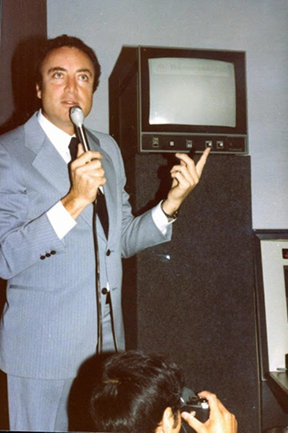
Arazi making a presentation of the Scitex  CEPS equipment in 1979
Arazi making a presentation of the Scitex CEPS equipment in 1979

During the 1960s and 1970s, as commercial offset lithography and film-based color reproduction were overtaking letterpress and single color work, high-end digital electronic production systems were acquired by the big printing companies and major publishers that could afford the investment.

By the 1960s—after analog electronic systems had been widely adopted in pressrooms and prepress and typesetting departments across both Europe and America—a race was on to develop a fully computerized page composing system. Companies like Hell, Crosfield, Dai Nippon Screen and other companies that had been part of the post-war electronics revolution jumped into the market to try and solve the problem of merging text and color photographs together electronically on a computer display.

However, it was a newcomer to the graphic arts industry from Israel called Scitex, founded by Efraim “Efi” Arazi in 1968, that made the highly anticipated breakthrough. Foreshadowing the impact of PC-based desktop publishing on graphic communications in the late 1980s, Scitex introduced digital files and computerization to the prepress production process and forever changed the printing industry.

Scitex

Efi Arazi (born in Jerusalem on April 14, 1937) entered the Israeli military when he was 16 and without graduating from high school. He made a name for himself as an exceptional electronics specialist while working on radar systems in the Israeli air force. Following his military service, with the assistance of the US embassy Arazi was admitted to the Massachusetts Institute of Technology in 1958 as an “extraordinary case” despite his lack of the normally requisite secondary school diploma.

While attending MIT, Arazi also worked at Harvard University’s observatory and digital photography lab. Under the direction of Harvard Professor Mario Grossi, Arazi petitioned NASA and was awarded funds to develop a camera system for scanning the surface of the moon on the unmanned lunar probes in 1966 and 1967. It has also been reported that Arazi’s invention was part of the equipment on the Apollo 11 mission that captured and transmitted video of Neil Armstrong’s first footsteps on the Moon on July 20, 1969.

After earning a bachelor degree in engineering at MIT, Arazi worked in the US for a short time for Itek corporation, a US defense contractor that specialized in spy satellite imagery. In 1967 he returned to Israel and one year later—along with several others who had been educated in the US—founded Scientific Technologies (later shortened to Scitex) with the aim of developing electro-optical devices for commercial purposes.

The Scitex Response 80 system and an example of a stitching designs from it
The Scitex Response 80 system and an example of a stitching design from it

Scitex’s first products were developed for the textile industry. The company sold nearly one hundred electronic systems that automated the process of creating knitting patterns. Since many colors were used in complex fabric designs such as the popular Jacquard pattern, Arazi and his Scitex team developed a scanner (Chroma-Scan) and image manipulation workstation (Response 80) that programmed electronic double-knit stitching looms.

These optical systems replaced manual and time consuming stitch-by-stitch drawings and punch cards that had been widely used in the textile industry up to that time. Scitex also later devised a system for imaging film for printing on textiles that included overprinting, trapping and repeating patterns.

Response 300

Recognizing the potential for new technologies in the growing international printing and publishing industries, Scitex began development in 1975 of a computerized color prepress system. Arazi stunned the graphic arts industry in the Fall of 1979 when he demonstrated the Response 300 system for the first time at the GEC expo in Milan, Italy.

Response 300 included an integrated color drum scanner, image editing workstation and laser film plotter. Directly challenging the domination of high tech graphic arts equipment by Hell (Germany) and Crosfield (UK), Scitex was the first company in the world to combine color image retouching and page makeup onto a single console.

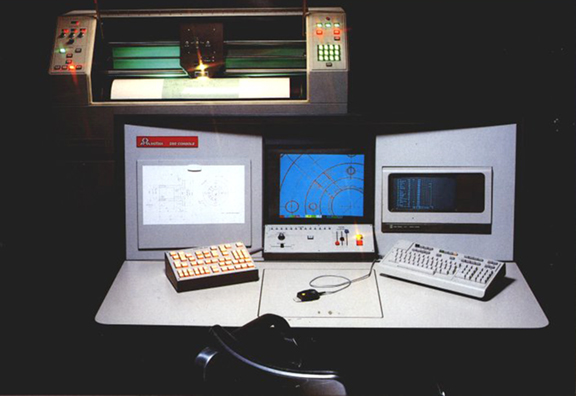
An early model Scitex Response workstation and console

Prior to the Response 300, the electronic color scanning process was based on an analog transfer of color separation information directly from a drum scanner to the film output device. The innovation of Arazi and Scitex was to place a minicomputer (at that time an HP1000) between the scanner and plotter such that the color separations were captured and stored in digital form. The proprietary image files could then be color corrected, retouched, scaled and cropped on screen prior to final output as film separations.

In describing the significance of the accomplishment, industry historian Andy Tribute later explained, “It allowed you to do in real-time on a terminal the sort of things we do in Photoshop now. … I remember watching Efi do a demo where he had a picture of a person with a Rolex watch on and he changed the date in real time on the Rolex. Today that may seem nothing but back then it blew my mind”

Within one year, Scitex had sold $100 million of the Response systems to printers and publishers. Through the mid-1980s, Arazi led Scitex as it developed a suite of products (Raystar, SmartScanner, Whipser, Prisma and Prismax Superstation to name a few) that brought the latest in minicomputer technologies to high-end prepress workflows. Scitex customers gladly paid the $1 million price tag for the flexibility and time savings that Scitex provided.

DTP & EFI

The first European installation of the Response 200 system for the textile industry in 1975

Scitex remained an innovator throughout the 1980s and 1990s as proprietary technologies and CEPS gave way to desktop publishing, industry standard file formats and PostScript workflows. Scitex was among the first prepress technology companies to embrace the introduction of Macintosh computers into graphic arts production.

In 1988, Scitex partnered with Quark technologies—developer of the most sophisticated desktop publishing software at the time—and made it possible for QuarkXPress users to build compound documents with high resolution full color images to be output for both commercial and publication printing.

In 1985, Arazi pushed the industry forward with the development of Handshake, a Scitex product that allowed a wide variety of systems including those of competitors to send and receive data from the Response line of products. Later Scitex was an advocate of Digital Data Exchange Standards along with Hell, Crosfield, Eikonix and others to smooth that transfer of data between all systems in the industry.

In June 1988, Arazi stepped down as President and CEO of Scitex. Six months later, when Mirror Group’s Robert Maxwell acquired a controlling stake in Scitex, Efi Arazi also resigned as chairman of the board. While the company had reached the height of its success with revenues approaching $1 billion and 4,000 employees, Arazi knew that personal computers were transforming the industry and it was time to move on to other business ventures.

After Arazi’s departure, Scitex continued to develop prepress workflow systems, laser imaging equipment, desktop scanners, digital color and soft proofing devices. The company participated in the transition from film-based workflows to the direct-to-plate revolution of the mid-1990s.

Along with all of its competitors, Scitex began to struggle financially and ended up selling its graphic arts group to Vancouver-based competitor Creo Products in 2000. The division of the company that went into digital printing called Scitex Vision was acquired along with the Scitex name by HP in 2005. The remainder of the business was renamed Scailex at that time.

In 1988 Efi Arazi founded Electronics for Imaging (EFI) at the age of 51. The new venture was no less successful then Scitex as EFI raster image processors were integrated in many high quality color laser and toner based printing devices. The EFI Fiery technology quickly became a standard in the graphic arts industry by the 1990s for low cost, high quality color proofs. The company—which bears the first name of its founder as an acronym—later expanded into ink jet printing devices, printing industry productivity software and print server and workflow software tools. Today EFI is one of the most important and successful technology companies in the rapidly changing printing industry. Efraim Arazi died on April 14, 2013 at age 76.